
Over the past month, headlines on federal food aid and the government shutdown have flooded news outlets and Instagram pages.
According to the Associated Press, various legal rulings and state responses have caused Supplemental Nutrition Assistance Program (SNAP) beneficiaries across the country to receive different amounts of benefits so far.
In states such as North Carolina and Texas, people have received partial benefits.
The Department of Children, Youth and Families said full benefits were issued to all Minnesota SNAP recipients Nov. 7.
While the situation remains in flux, the needs of people nearby aren’t. Here’s what’s going on and what Bethel students can do about it.
How does SNAP work?
The USDA froze federal funding for SNAP, the United States’s largest food-assistance program for low-income families, Nov. 1. This is the first time SNAP has experienced a halt in funding.
SNAP collaborates with private and public entities to provide food assistance to low-income families. Through SNAP benefits, low-income households and families in need can purchase necessary groceries and food items, such as fruits, vegetables, meat, dairy products and more. Each state has their own SNAP entity, which works with an electronic benefit transfer (EBT) vendor to distribute funds. Each household receives SNAP benefits monthly through an EBT card, and their funding is determined based on factors such as income and household size.
SNAP provides roughly 1 in 8 U.S. residents (approximately 42 million people) with an average of $187 monthly. According to the Department of Agriculture (USDA), about 38.5% of households that receive benefits have children under the age of 18.
What is the current status of SNAP benefits?
After a court ruling that funding SNAP at a lower level is unlawful, the current administration agreed to provide further funding to the agency.
November 3, the Trump administration promised to continue the agency and fund half of the normal amount households receive, by utilizing money from the Agriculture Department contingency fund. The budget will decrease from its typical $8 billion to $4.65 billion due to the scarcity of proper funds.
As of November 9th, Minnesota has fully funded SNAP within its state, providing support to 440,000 Minnesotans who use the agency’s benefits, according to CBS News. Governor Tim Walz declared that $4 million in emergency state funding would be provided to food shelves. Other states have followed Minnesota in funding SNAP at the state level.
However, CBS reported that the U.S. Department of Agriculture instructed states on Saturday to “immediately undo any steps” that were taken to provide full November SNAP benefits to beneficiaries.
The Supreme Court is expected to rule Tuesday on a request from the Trump administration to prevent states from providing full SNAP benefits.
How does the government shutdown play a role?
The United States government has been shut down since Oct. 1, after Congress was unable to agree on a proper resolution to fund government services.
The Senate passed a bill Monday night that could end the government shutdown. The bill will now be sent to the House of Representatives for approval, working towards ending the shutdown that has lasted 41 days as of Nov. 11.
The end of the government shutdown will result in federal agencies becoming fully funded once again. However, until then, Congress will be unable to enact a full-year appropriation until the bill is passed by the House of Representatives and signed by President Donald Trump.
According to NPR, without an appropriations bill from Congress, federal agencies cannot spend money, according to the Antideficiency Act. Federal agencies are required to stop operations and activities that are not required for the basic function of the agency.
How can Bethel students help?
Here are some ways college students can support food shelves in Minnesota and help low-income families in need of food:
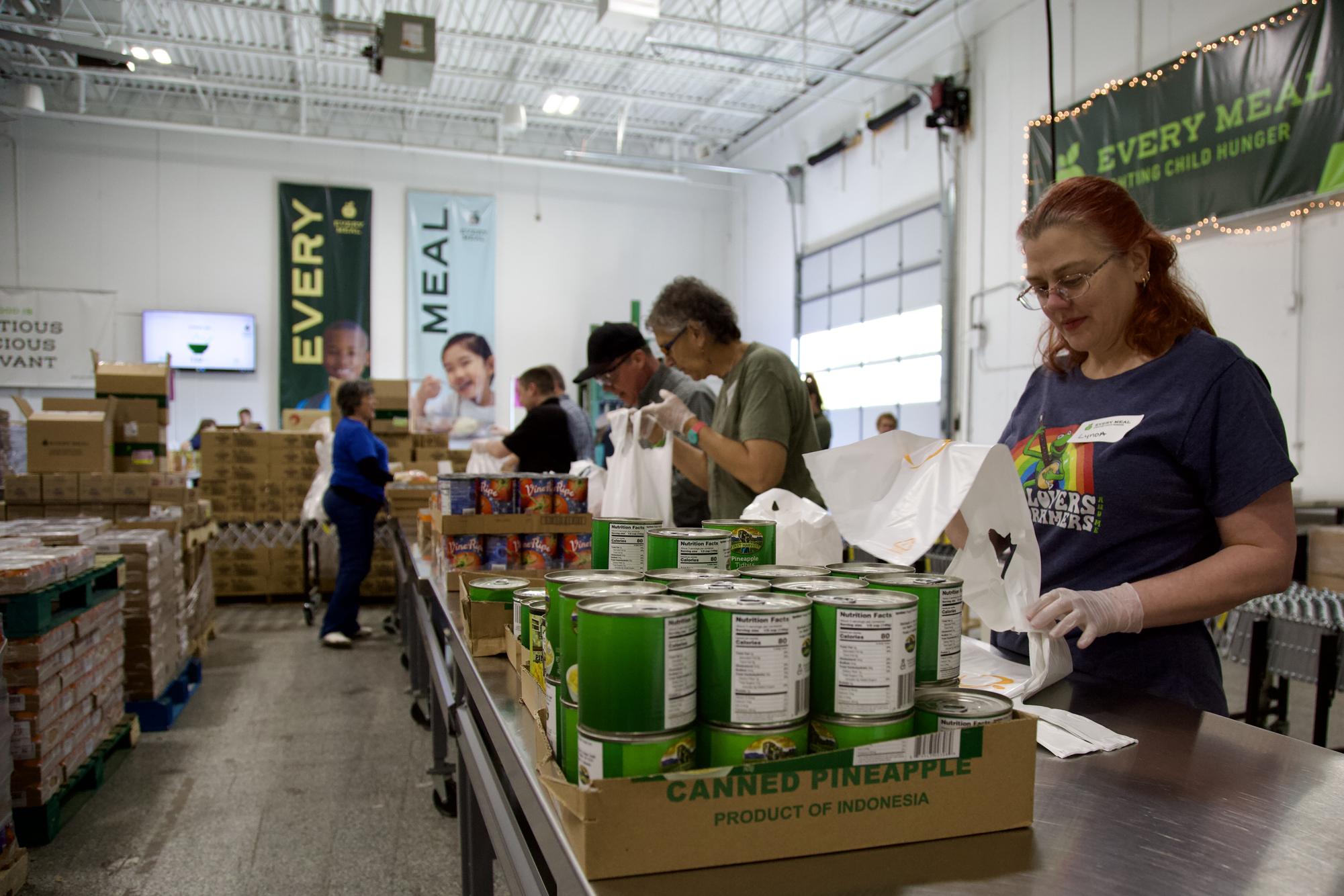
- Volunteer: Students can volunteer at local food shelves, packing food and organizing donations. Some local organizations near Bethel’s campus include:
- Ralph Reeder Food Shelf, 2544 Mounds View Blvd, Mounds View, MN 55112
- Every Meal – 2723 Patton Rd, Roseville, MN 55113
- Vandais Heights Food Shelf, 655 County Rd F E, Vadnais Heights, MN 55127
- Salvation Army Central Minneapolis Social Services Food Shelf, 2727 Central Ave NE, Minneapolis, MN 55418
- Donate: College students can donate non-perishable food items and other supplies, such as paper bags or cardboard boxes.
- The city of St. Paul launched a food drive last week to assist SNAP benefit recipients. Students can drop off canned goods, shelf-stable milk, and hygiene items at the following St. Paul locations:
- Highland Park Community Center, 1978 Ford Parkway
- Arlington Hills Community Center, 1200 Payne Avenue
- North Dale Recreation Center, 1414 St. Albans Street N.
- Oxford Community Center, 270 Lexington Parkway N.
- Participate in campus events: Students can host or participate in on-campus events that help support local food shelves, such as food drives and fundraisers.