
“Gretchen, come look at this.”
Senior history and psychology major Gretchen Mugglin rushed into her dining room. Her roommate, Bethel alumna Mild Du, sat frozen at the table; her eyes fixed on her cellphone. Mugglin stood behind her and squinted.
A Sept. 20 Facebook post from the Minnesota-based independent news organization Alpha News glowed on Du’s screen. The post displayed a screenshot of a devotional written by Bethel University history professor Chris Gehrz with the caption, “An Alpha News reader shared this Substack from a Bethel University professor on Charlie Kirk.”
Gehrz’s devotional on Psalm 51, which has since been removed by the author, was released Sept. 14 on Gehrz’s Substack. Substack is an online publishing platform.
The piece was written in response to the shooting of conservative activist Charlie Kirk, who had been killed the day before. Out of the around 800-word devotional, three sentences were posted on Alpha News’ Facebook.
“As I’ve continued to contemplate the life and death of Charlie Kirk, I’ve thought more and more about the tragedy of someone dying so young. All mortal lives are unfinished, but his killer took from him years and decades in which Kirk could have lamented his ugliest words and most destructive deeds and learned a better way. So pray that God will create in all of us clean hearts while we still have time, that he will put “a new and right spirit” within everyone who has strayed from his Word (Ps 51:10).”
Du scrolled through the comment section.
“Bethel has changed so drastically. So concerning,” one user wrote.
“He proclaims to be a Christian… wow,” said another one.
“If this is Bethel I am ashamed of my Alma Mater and will not proudly send my 3 kids there,” another commenter wrote.
Alpha News senior reporter Liz Collin posted the photos on X Sept. 20, which Alpha News reposted to their 96.7K followers the same day. Across X, Instagram and Facebook, the Alpha News posts received 453 comments and 1468 likes.
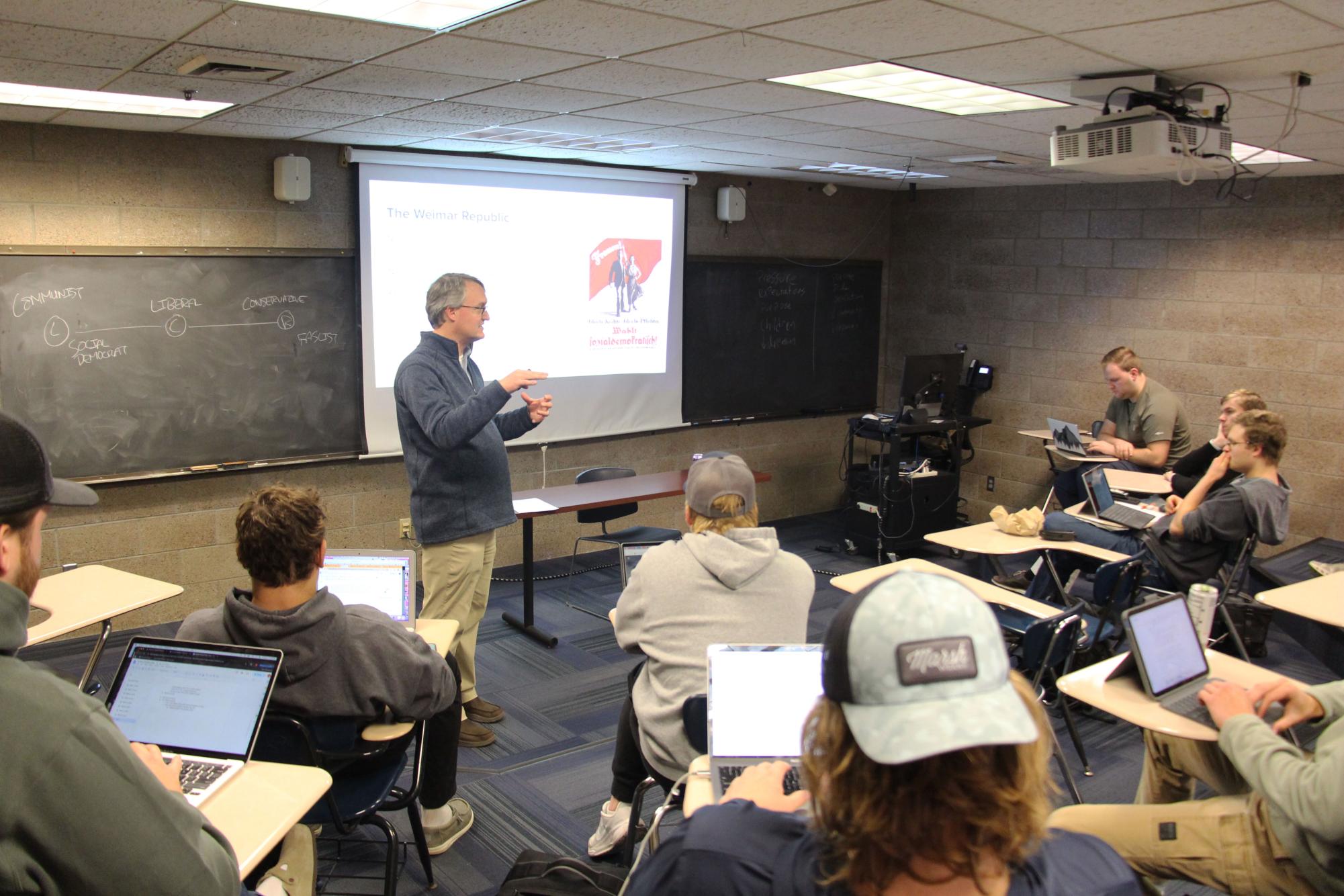
Six days later, Mugglin waited in a quiet classroom, surrounded by her History of Modern Europe classmates. Their eyes shifted from the phones in their laps to the door in the front of the classroom. Gehrz entered, smiling and greeting his students like he always did. Their eyes followed. A few students smiled back, but many stayed quiet.
“When he walked in, it was a very heavy weight,” senior political science major Peter Wicklander said. “I didn’t know what was going on.”
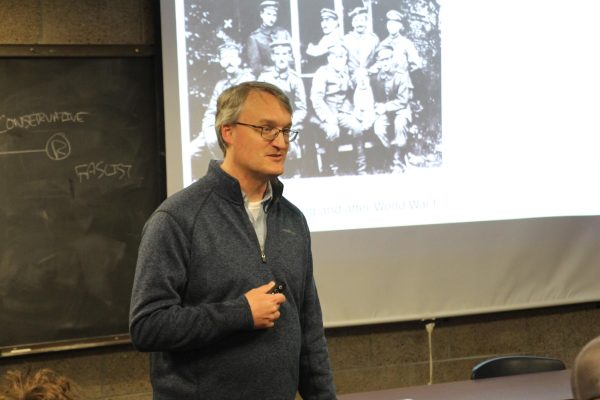
Gehrz told the class he wouldn’t be teaching their planned lecture for the day, and that he had no trouble pushing it back until the following week. Instead, he pulled up a slideshow on the smartboard containing images of the Alpha News social media posts and the comments he received.
Gehrz assessed the situation with the same five pillars that he teaches students to use while studying historical events: complexity, change over time, context, causality and contingency. The “5 C’s” are meant to show students how historical events are influenced by prior social, economic, political and cultural conditions.
“He was very reflective about it,” Mugglin said. “It wasn’t just him defending himself or being super defeated.”
Along with comments on social media, Gehrz received critical emails sent to his Bethel email address from online viewers who’d discovered he taught at Bethel University. As Gehrz addressed the class, Mugglin said she could see the situation had greatly affected him.
“I was really sad,” Mugglin said. “He’s got teenage kids, like, he’s a dad. He loves history, he loves teaching, he loves this place and the students that he interacts with.”
For Wicklander, the emotional intensity within the classroom overwhelmed him.
“I basically just emotionally shut down for that class,” Wicklander said. “It took me two days for me to go back and just be mentally able to, just go through what he said and what I thought about that. I knew professors here don’t share my political views, but I didn’t know that this might happen.”
Gehrz began teaching at Bethel in August 2003. For 14 years, he wrote weekly on a personal blog titled “The Pietist Schoolman,” which then evolved into a newsletter on Substack where he reflects on the intersections of Christianity, history and education.
While Du attended Bethel, she majored in media production, business and political science.
“The professor who’s representing the head of the department should be able to write stuff like this,” Du said. “He would never want to cause harm to anybody based on what he’s posting. He just wanted to reflect on what was happening in the world, and how we can look to the Word in the moment of it.”
As a former Bethel student body president, Du reflected on the pressure she felt to be mindful of how she was expressing herself and whether, as a student leader, she could speak freely on certain issues.
“You’re somebody that other people look up to, so you don’t want to be a bad influence,” Du said. “I really couldn’t post about certain things, but I think that’s like any student at Bethel, because we live in a bubble where it’s like, ‘Can I post this? What are people going to say about me if I post this?’”
Wicklander, Du and Mugglin, along with the rest of Gen Z, have grown up in a culture of online accountability. The phrase “Cancel Culture” first gained traction in mainstream media in 2017 through the #MeToo movement, leading to the cancellation of powerful figures in the entertainment industry accused of sexual assault. According to EBSCO, it later evolved into a way for people online to call out politically incorrect speech in the wake of the Black Lives Matter movement in 2020.
Online cancel culture has once again become a hot topic with the recent media scrutiny of public figures such as late-night talk show host Jimmy Kimmel and actress Jamie Lee Curtis for their comments on the shooting of Charlie Kirk. Just recently, the US Department of State wrote on X that they had revoked visas from six people over comments made about Kirk’s death.
“I personally don’t like cancel culture, because it feels like they’re willing to take anything just to bash someone else,” Du said. “People are more brave over the internet, because you’re not looking this person in the eye. Would you ever say this to this person’s face?”
Wicklander felt that cancel culture can have both positive and negative implications.
“Cancel culture, in its current form, is very toxic on account of the fact that, especially on the left side of the aisle, people cancel without sources,” Wicklander said. “But I do not believe that cancel culture should be wholly abolished because then we would have no other way to say ’No, that is a bad thing.’”
Within the classroom, Mugglin says Gehrz encourages open-mindedness and empathy, and challenges his students to avoid black and white thinking about historical events and people.
“If you speak in absolutes, he’s like, ‘Yeah, you know, there’s also other perspectives, and maybe we should examine whatever it is we think we believe more closely,’” Mugglin said. “And that doesn’t mean we need to change it, but we need to make sure that is what we believe.”
At Bethel, Wicklander says students are called to seek truthful information.
“As Christians, we have a responsibility to treat others how we want to be treated,” Wicklander said. “And we should always do our own research. We shouldn’t just go off of lies or rumors.”
Oct. 9, 19 days after Alpha News posted about Gehrz, he reflected on the situation in a Substack post titled “Thinking in Public.”
“In the process, I hope that thinking in public unveils the same traits I try to model for college students,” Gehrz said. “Curiosity, passion, open-mindedness, empathy, and the vulnerability to confess the contradictions, tensions, and other limitations in my own understanding.”
Gehrz declined to comment on the post from Alpha News.





Ray Smith • Nov 15, 2025 at 12:56 pm
Can’t believe his comments were so alarming to some folks.