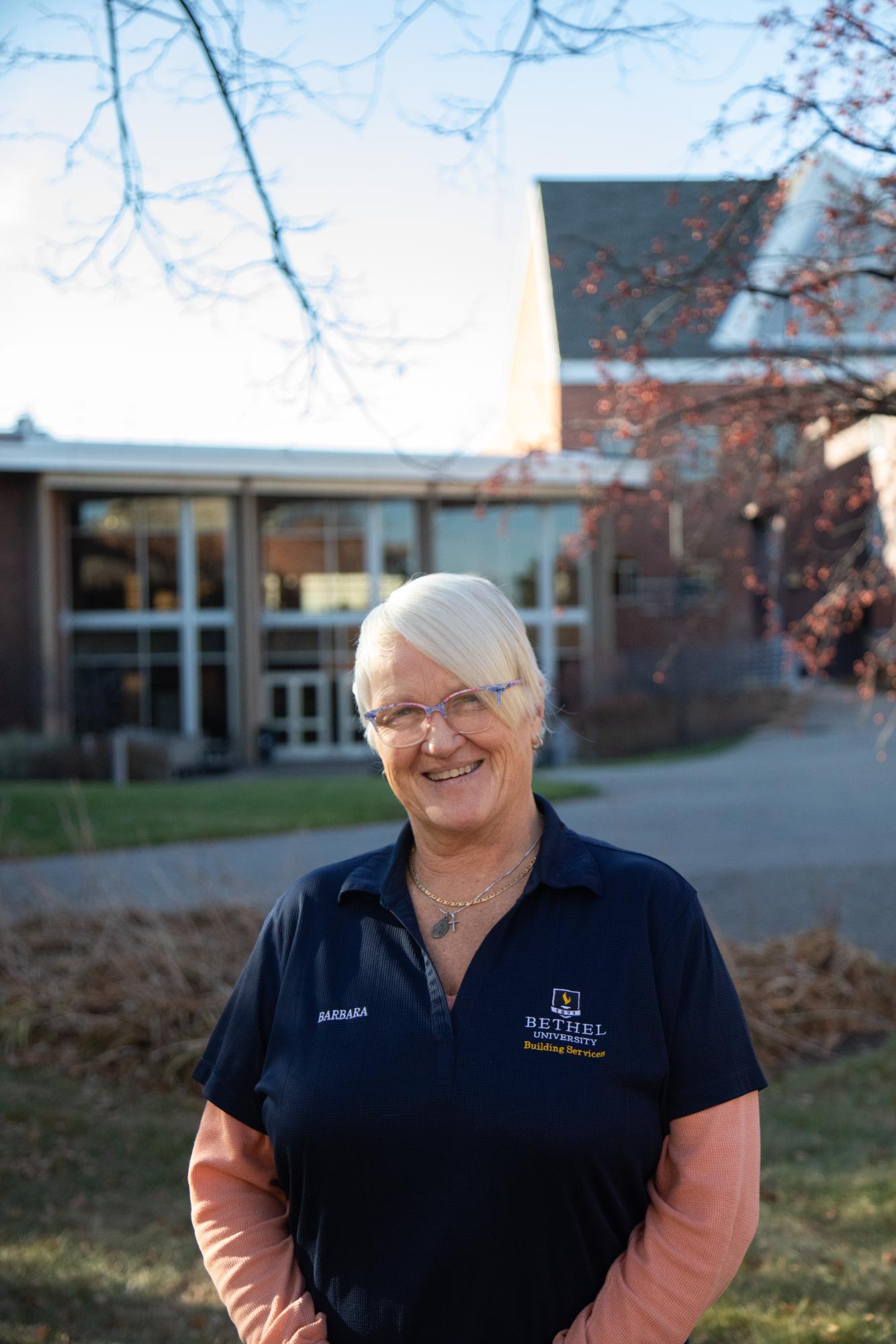
Before I had my first conversation with Barbara Josephs, she told me she didn’t understand why I wanted to write a story about her. Before I asked my first question, she said I should interview Malia Beilby, an All-MIAC soccer player. It’s not that Josephs has anything to hide; she just doesn’t think she’s anything special.
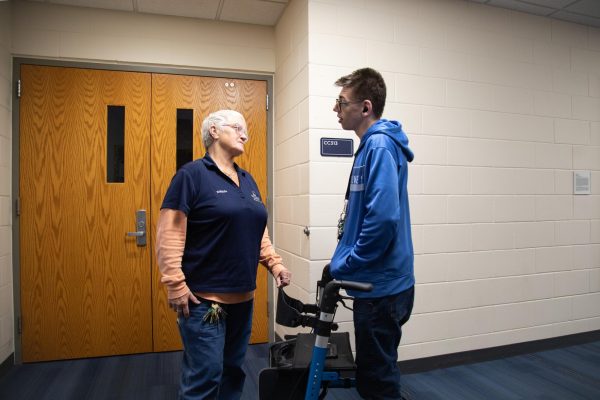
I didn’t get to start asking my questions until about ten minutes into our interview. She knew every person who walked by. And even the ones she didn’t know, she still acknowledged. She thanked a young man in an army uniform for his service and offered to give a piggyback ride to a girl with a torn ACL. The students are the reason she works facilities management at Bethel University.
“This is why I love Bethel. That’s why I’m here,” Josephs said. “People are just going through stuff, and all you have to do is listen.”
Josephs has worked two jobs at a time throughout her entire life; it’s the only way she knows. She grew up in the Dunedin Terrace projects on the West side of Saint Paul — government subsidized housing for low-income families with a single mother. She’s the youngest of ten. Her childhood was a mix of sports, Christmas time, gangs, drugs and unspeakable things no child should ever have to experience. Her brother ended up in prison. One of her sisters got pregnant at 15 and another at 16. Josephs knew that she didn’t want that for her life. She wanted to graduate from high school, get an education, find a job and prove to her mom that she could be better.
But her mother never got to see it. Josephs had three months left of her final semester at St. Paul Votech– now St. Paul College– when her mother died.
Her mother called Josephs the day she passed. She’d had a headache and was going to the doctor, but Josephs knew that something was wrong. She died of a brain aneurysm. They always thought she’d go because of a heart attack since she had been a smoker all her life. She was 58-years old.
In trade school, once you choose to leave, you don’t get invited back. But Josephs knew she needed to take time off while her mom was in the hospital. So she told her instructor she wouldn’t be finishing.
Josephs’ entire class came to her mother’s funeral. They sent her flowers with a letter that said they would allow her to return to school and finish her education. She completed her final three months at St. Paul Votech, continued onto the five-year apprenticeship program at Minneapolis JATC, and finally became an electrician.
“She died so young because she had such a big family, and he always takes the good ones first, Josephs said. “That’s why I’m still here. There’s work I gotta do. I hope she’s proud.”
Even though her mother is gone, Josephs still tries to be like her every day. Her mother had a good heart; maybe too good a heart, as Josephs would say.
“I hope that I’m as giving as she was, I probably am not, but I want to get better at it,” Josephs said.
And she wants to have her mother’s endurance. Even with ten kids and two jobs, Josephs’ childhood home was always clean. Still, Josephs worked to help her mom, buying all her own clothes so she could fit in with the other junior high kids.
Josephs got married at 19 to “the nicest guy in the world” and got pregnant at 21. But at that point she had bigger aspirations than being a wife; she wanted to play ball. And party, do drugs, and smoke weed.
“I went to him one day, and I said I’m not a good wife, you need a good wife. Broke his heart. He hung around for like eight years trying to get me back,” Josephs said.
She never remarried, and she has no plans of ever remarrying. One of her sisters has been married since she was 15 years old, but it hasn’t been the happy-ever-after everyone dreams of.
“It’s been a really miserable life for her,” Josephs said. “I’d rather be lonely and single than lonely and married.”
—
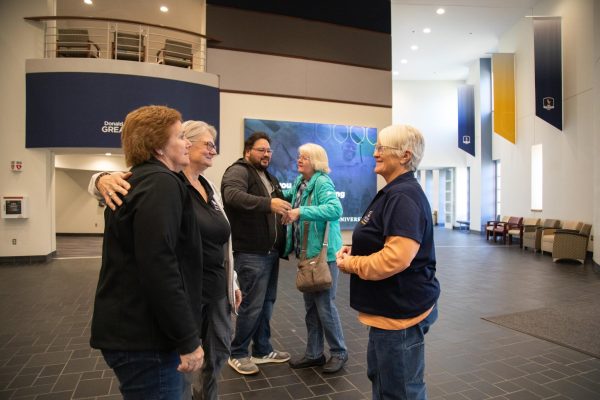
Josephs claims she’s bad with names, but that’s entirely false. She remembered every student’s name that came to us during the interview. They’d come up to her, give her a hug and then chat for a minute or two. She’d ask them about hockey, their mother, relationships or their family’s resort. Some called her “auntie,” and others called her an “angel.”
“Students have something to say to you. Like, he was just having a bad day, but I didn’t know that. I was just asking,” Josephs said.
Josephs will have worked at Bethel for three years in December. She remembers one morning when she first started, walking to her office, and a group of boys had their Bibles open in the Loft. They were chatting and praying over one another. She started crying, and she couldn’t stop. One of the boys asked if she was okay, then he invited her to join the group.
“God’s timing is perfect in all things,” Josephs said. “We can take our grief and know that he’s there with us. There’s a reason we are going through that stuff, and it’s just to get closer to him.”
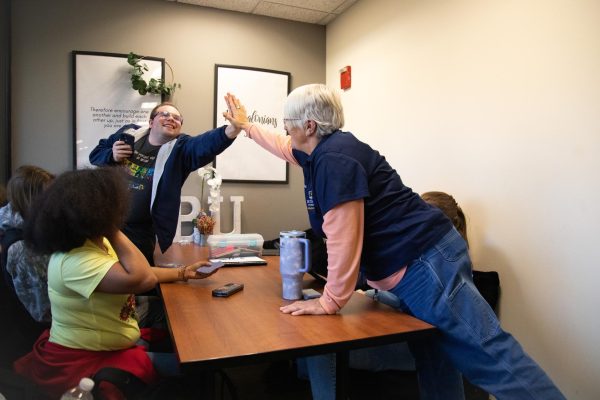
Now, Josephs leads the Catholic Student Association Group every Friday, from 10:15 -11 a.m. She takes her students to her church and teaches them the importance of grieving. Erica Hildebrandt is a sophomore chemistry major in the Catholic Student Association Group.
“She is one of the most kind, caring, loving, generous individuals I’ve ever met. Like, truly, that woman is a woman of God,” Hildebrandt said. “You can go to her for absolutely anything. She has the biggest heart ever.”
Josephs said she wants to love everyone around her while on this side of eternity. It doesn’t matter what they look like or what they believe; everyone comes from the same Creator. But it’s not always easy. She chuckled recalling how a lady started screaming at her during church.
“I said, ‘You just have to calm down,’” Josephs said. “The old Barbara would have gone nuts, swearing all over the place. Not this new one.”
She credits the “new Barbara” to her daughter, Cristy.
“She teaches me a lot. She never says one bad thing about anyone ever,” Josephs said. “I think just having a relationship with her made me want to keep getting better.”
She also credits the “new Barbara” to Jesus.
—
Josephs met Jesus when she was 8 years old. She was raised Lutheran, but is now Catholic. She doesn’t understand why she made it out of the projects, why she got a job, why she got a second chance at trade school. Maybe it was partly because she played sports, maybe it was partly because of her daughter, or maybe it was always because of Jesus.
“I still get freaked out knowing that he loves me,” Josephs said. “It still makes me cry, it’s hard to believe. I always say, ‘Why would he stick around with a [kid] from the projects?’’’
She’s still learning how to grasp that. But ultimately, his love is the foundation of her life.
“We can just love like him. People are just lost, and our job is to bring people to Christ,” Josephs said.
And she does. She’s walking alongside her friend who lost her job and is going through a divorce after 19 years of marriage. She makes dinner for people from the projects. She encourages her sister to put on Christian music after long days. She supports her daughter, and she prays for every student she encounters.
“So my heart aches for people like that, but I think I hang on to that type of person too,” Josephs said.
She believes that God has everything under control, although she does admit it would be nice to know what he’s up to every once in a while. But it’s worked out in the past, so she believes it will work out now. She calls those moments her “Jesus stories.”
Like when she bought a house in 2004– even though she already had a house– to help out a friend. And 21 years later, her daughter and granddaughters were able to move into that same house and live rent-free.
“Isn’t it amazing what God does, though,” Josephs said. “He knew that my daughter was going to need that house at the very moment she needed it.”
Another Jesus story happened when she worked in a local school district. She got five days of unpaid work for talking about Jesus.
“My boss comes up to me and goes, ‘Just so you know, Barbara, I believe in Jesus too, but I don’t talk about him,” Josephs said. “And I said, ‘Well, that’s where we’re different. I can’t stop talking about him.’”
The next day, she put in her two-week notice. If she hadn’t left, she would have never applied for the facilities management position at Bethel.
—
It took us a month to find a time to interview because her schedule is so crazy. She leads a team of four contractors: two come in on Mondays and the other two come in on Tuesdays through Saturdays. She starts her day at 5:30 a.m. and walks through the whole building, making sure the tables and chairs are where they are supposed to be. Then she meets with the contractors at 8 a.m., giving them their tasks for the day. None of the contractors speak English, and Josephs doesn’t speak Spanish, so she relies heavily on Google Translate. She’d love to take a Spanish class, but classes only happen during the day, and she’s always working.
“It works great, I don’t mind doing it. I love the people, they are great workers,” Josephs said. “Everyone’s a good worker in my opinion.”
She leaves Bethel at around 2:30 p.m. and drives over to St. John’s Baptist Catholic Church, where she works until about 10 p.m. Then she wakes up the next morning and does it all over again.
“When I wake up, I’m like, ‘Thank you for putting me on my feet,’” Josephs said. “And I come in and I pray for the students.”
—
She finished her story. I sat speechless. Inspired and a little overwhelmed. She gave me a hug and told me to have a blessed day. She said she’d love to buy me lunch sometime. I have so much catching up to do for the rest of my life. She’s a better journalist than I will ever be, because she notices the people I walk right by.






![Street Team volunteer captain Sarah Engwall hands a Mountain Dew to a woman waiting for the light-rail Friday, Feb. 27, 2026 in Minneapolis. Engwall said volunteering for the ICCM Life Center’s Friday Night Street Team has challenged her faith. “[It has] been so humbling when meeting people who were in great spots but lost everything,” Engwall said. “They still had their faith.” (Photo by Kathryn Kovalenko)](https://thebuclarion.com/wp-content/uploads/2026/04/260228_ICCM_kovalenko01-1200x800.jpeg)