





My hands shook, my voice wavered and I could barely think above the music. A crowd of faces stared back at me.
My memory blanked. My brain panicked. I was going to forget the words.
The instrumental portion of the song played on as I used my free hand to smooth my sarong. The lights felt especially bright in the Underground, which did nothing to calm my nerves.
Keh chea preah koon… Shoot. What came after that?
It was the Asian Student Alliance’s 2025 AAPI Month celebration, and as an overly excited freshman, I had volunteered to sing a song in Khmer. I was the first performer of the night, and man, was I nervous.
I ended up pulling myself together and finishing the song strong, despite the terror evident in my voice.
One year later, I realized that even if I had forgotten the words and chosen to sing Asian-sounding gibberish, no one would be able to tell the difference.
No one would know that my Khmer is broken, and I still don’t know how to reconcile what it means to be fully born and raised in the United States, while still holding onto a heritage I’ve been told defines me.
Beginnings
Growing up in an Asian-American household had its ups and downs. My home life was extremely family-oriented; my parents seemed stricter than most of my friends’. When I was younger, I used to question why we couldn’t be more like my friends’ very American families.
All of it made sense when I thought about my parents’ history and heritage.
As children, both of my parents were faced with something no child should ever have to go through—surviving a genocide. In 1975, the communist Khmer Rouge took over Cambodia and attempted to transform the nation into an agrarian utopia. The capital city of Phnom Penh was evacuated, and thousands of people were forced into the concentration camps that awaited them in the countryside. My mom’s family was just one among many from the capital that had everything stripped away from them.
After four years of living off minimal rice rations and field mice, and witnessing the death of numerous family members, both of my parents found refuge in the United States. They survived a regime that killed one-fourth of Cambodia’s population.
Life wasn’t easy sailing after my parents immigrated, but they were no longer fearing for their lives.
While many Asian cultures are family-focused, my parents’ horrific experiences led them to love me and my sisters profoundly and hold us close to home. We always finished food off our plates during dinner, knowing what a blessing it was to have so much to eat. The respect dynamic for elder relatives and my parents, also extremely important in Cambodian culture, was elevated by our Christian upbringings and the knowledge that my parents had been through the unimaginable.
I grew to acknowledge this respect as a part of my home and who I was. But not all of my friends understood that.
No matter how hard I tried to explain to a high school friend why my parents deserved to know where I was before I traveled anywhere, she didn’t get it.
She made comments like, “Will you be 27 and doing this?” and “I guess you’re still used to being a kid. Maybe someday you’ll get sick of it.”
Bethel and beyond
I came to Bethel for community. I was excited to grow in faith with fellow Christians, but I wasn’t sure what to expect as an Asian student coming into a predominantly white school.
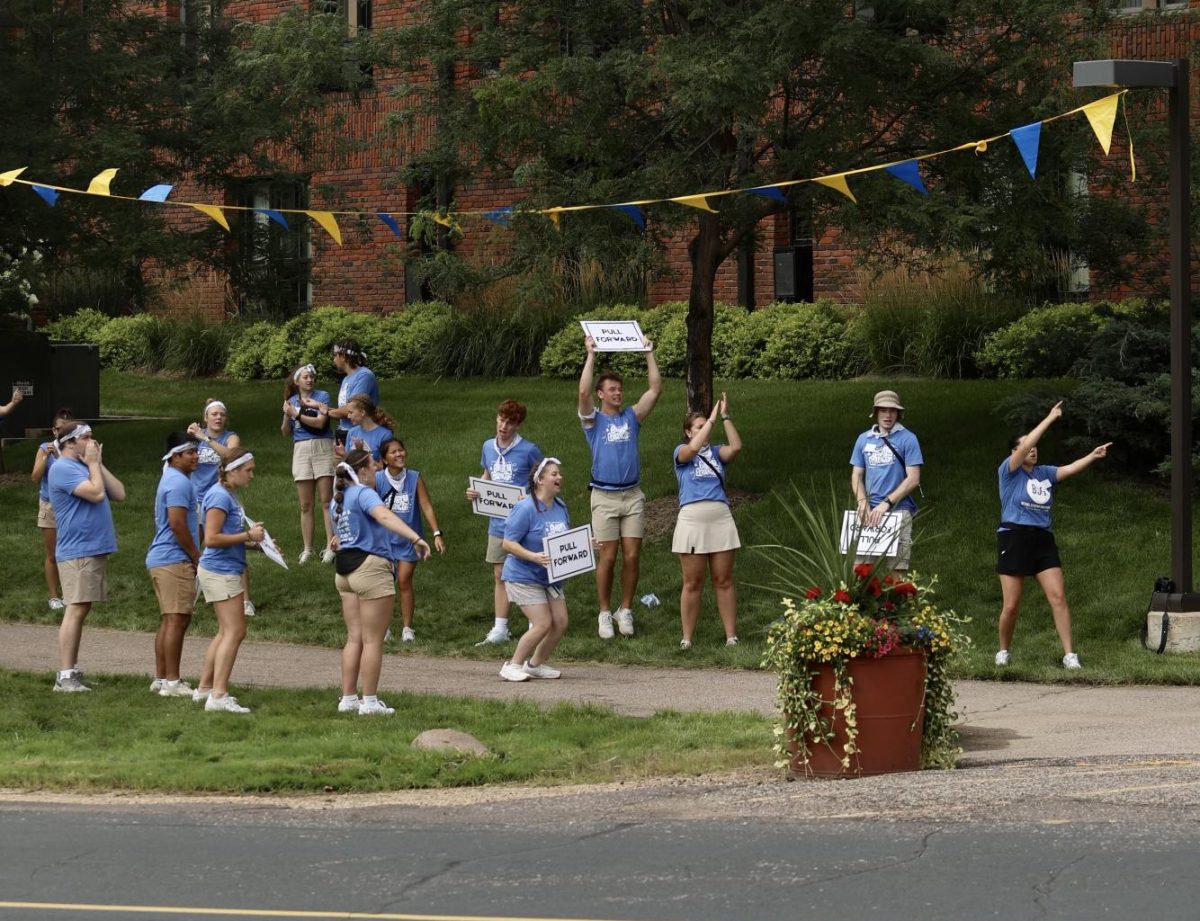
Move-in day of my freshman year was particularly scary. Nerve-wracked and heart pounding, I was surprised to be greeted by two Asian students at the West Gate, who I later learned were the directors of Bethel’s Asian Student Alliance. Asians actually existed at Bethel? No way.
The first few weeks of the semester proved that Bethel handled culture differently. Swarms of people crowded the Underground for the Kingdom Culture kickoff event. Asian Student Alliance meetings had to be moved from the Cultural Connection Center to CC430 because of how many members attended. Every Monday and Wednesday, I watched a diverse group of student representatives call out, “What’s up, Bethel? It’s 10:20” from Benson Hall’s big screen.
But the highs only lasted for so long.
Trips to the dining center became disheartening. Students lining up at the stir fry station and raving about the food made me question if I was a “bad Asian” for pivoting away from the undercooked rice and Panda Express-like dishes. I’d watch the conveyor belt of trays file into the dish room, full of uneaten food, and wonder how many Bethel students truly recognized what a blessing it was to have so much food available to them.
Deep in the middle of this year’s cold, bitter J-term, I set out on a research project to better connect with my ancestry. I made my way up to the library’s main collection in search of non-fiction books on Cambodia. My fingers glided over the titles on Asian history before I realized there were only a few that fit what I was looking for. The shelves were lined with books on China, Japan and Vietnam. There were only fifteen books on Cambodia, not even enough to fill up a shelf.
Even involvement in the Asian Student Alliance changed from my freshman year at Bethel. This time last year, I was helping set up paper crane garlands above the Underground doors and rehearsing my Cambodian song in the CC fourth-floor practice rooms.
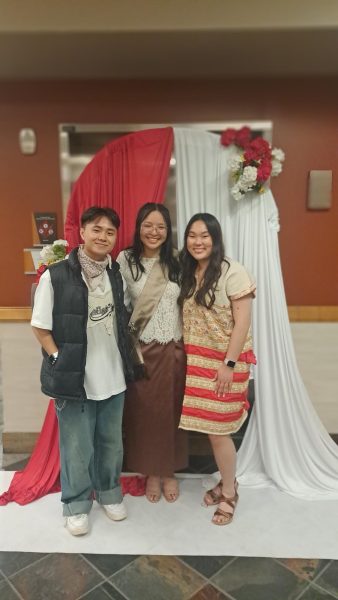
But the ASA event this past fall made me realize that support from my fellow students only goes so far. Attendance mainly consisted of local Asian families and the friends of students performing that night. The turnout I’d seen last spring was nowhere to be found.
I wondered if non-American culture must remain trendy and exciting in order to be appreciated and invested in.
A real identity crisis
This brings up a larger issue of cultural identity that’s much bigger than Bethel’s campus.
Ethnic culture has become diluted for minorities and white people alike. Instead of exploring vivid elements of ethnicity like traditional dances, values and attire, it feels culture has been confined to the checkbox racial identities on demographic surveys and “cultural” foods from chain restaurants. Authenticity has no place in a society of ever-changing ideals, generalizations and preferences.
As a Christian, I know I hold an identity that exceeds socioeconomic class, occupation, nationality and race. And yet, a part of me can’t forget that I’m not just a child of the Lord, but also a Cambodian daughter of the King.
Even still, I grapple with nationality and ethnicity. I realize my surroundings have grounded my beauty standards in Caucasian features. I notice myself catching on to behaviors and language that would be considered disrespectful in my Asian-American home.
When I tell people about my family’s history and how we got to where we are today, I have to wonder if I know more about how to be an American than a young Cambodian woman.
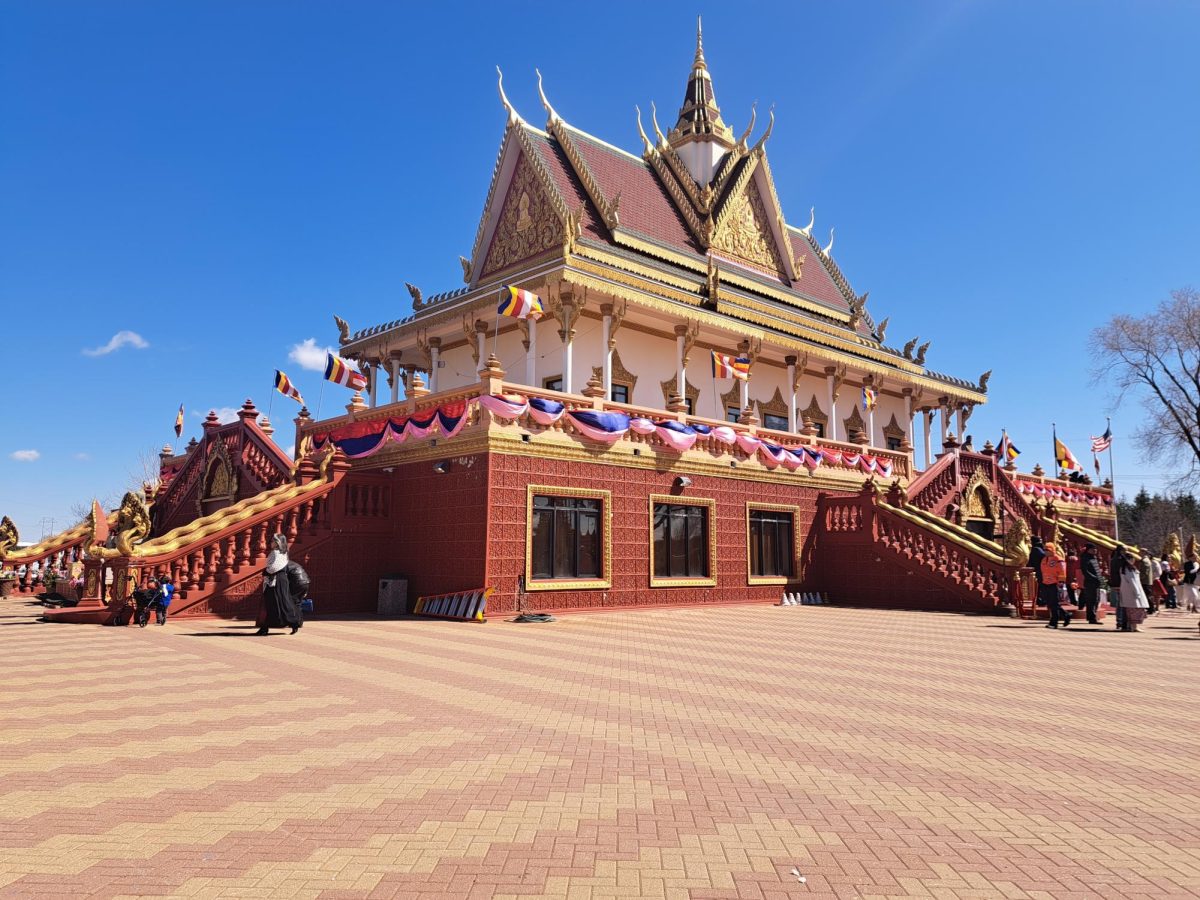
April 19, 2025, I attended a Cambodian New Year celebration with my family in Hampton, Minnesota. Our car slowly inched forward on the road, just one among many in a long line of families waiting to approach the largest Cambodian Buddhist temple in the United States. When we finally got out of the car, the sight before me took my breath away.
Asians. All I saw were Asian people. Hundreds, maybe even thousands of them, spread across the grassy expanse of the property, running booths with marinated beef skewers or banana leaf-wrapped som jait, selling Khmer clothing and jewelry and taking pictures at the temple.
I felt like I had never seen so many Asian people in one place in my entire life. But amid my awe, I felt incredibly out of place.
I hardly understood a word of Khmer being spoken, continually lost my dad and sister in the crowd and felt more like a foreigner than anything else.
There’s never been a day when I’ve pretended to be white or wanted to change my race, but there are certainly days when I forget what it means to be Asian.