
















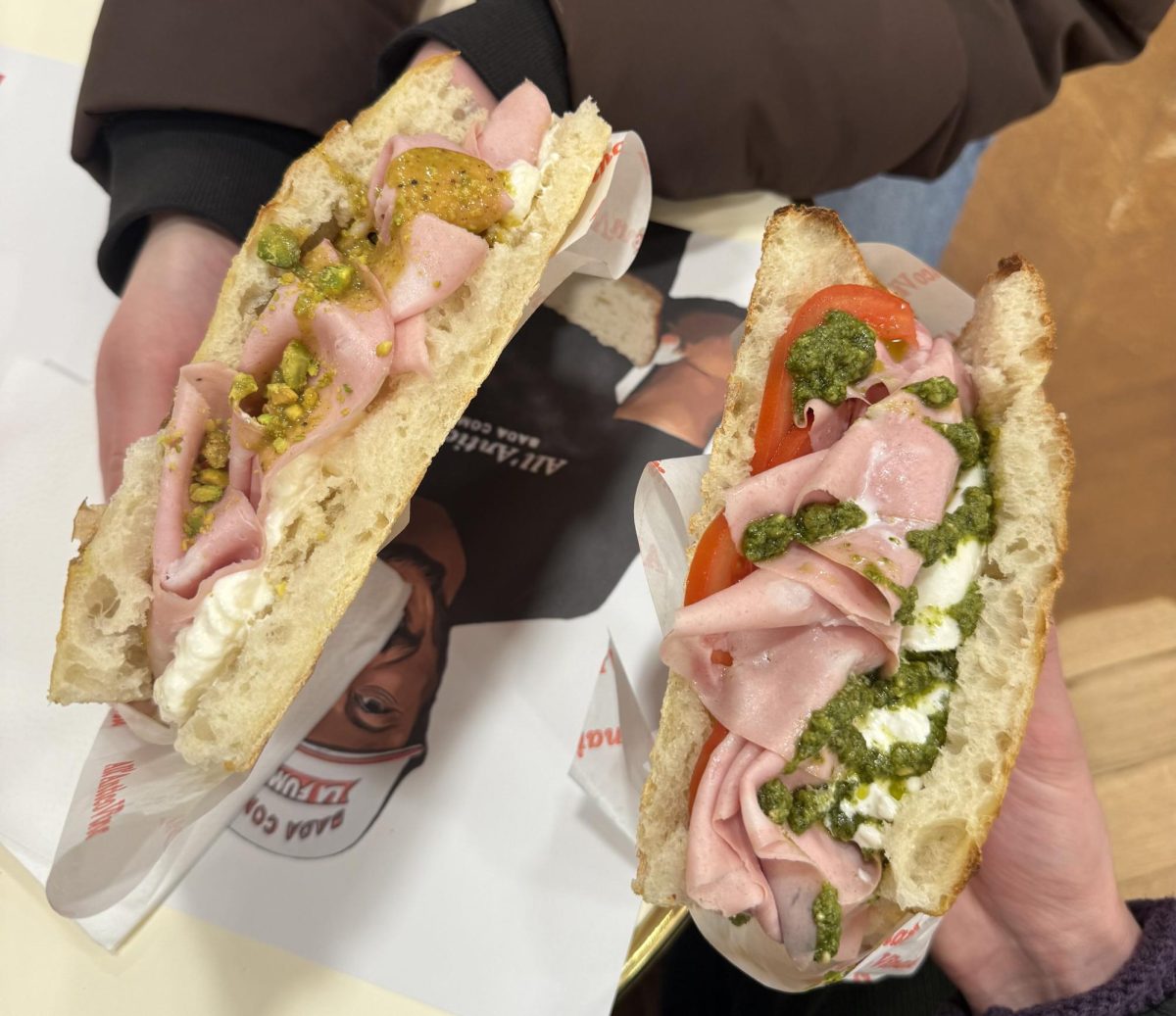




I bit into my sandwich after waiting 15 minutes in line for All’Antico Vinaio, one of the most popular sandwich shops in Florence.
I could not help but marvel at the just-out-of-the-oven Tuscan flatbread, the fresh stracciatella cheese, the thinly sliced mortadella ham, the sliced olives and the pesto they just made in-house. The crunch of the bread, the olive oil dripping down my hand and the creaminess of the cheese were all I could ever ask for in something as simple as a sandwich.
Quite frankly, the last thing on my mind was the sandwich’s macros and how much protein or fat it had. In my experience, a meal enjoyed and shared with friends, especially after walking all day in the beating sun, was worth a thousand times more than a protein-packed ground beef and potato bowl that I often meal prep nowadays.
I get it, I can’t bring a restaurant-quality sandwich with all the just-made ingredients to school every day, but there has got to be a middle ground between that and the easy ground beef and potato bowl.
The Italian ethos is “La Dolce Vita,” meaning “sweet life.” It’s all about indulging in life’s pleasures and luxuries and embracing a lifestyle of enjoyment. Gastronomy, the art and science of meaningful food experiences, is a significant part of their culture. Espresso multiple times a day, plus the Mediterranean diet consisting of seafood, fresh fruit and vegetables, lots of olives and olive oil and over 350 types of pasta and 2,500 types of cheese.
One would think that, with the wide variety of foods available, there would be some high-protein options to choose from when visiting. For me, I found it to be quite the opposite. Italians consume more pasta than any other country in the world, averaging about 23 kilograms per person per year. Yet, their life expectancy is 84 years for both sexes, compared to the United States’ 79.
While I was in Italy, it baffled me that this was possible with their diet consisting of (what seems like) a majority of carbohydrates. Did this mean the Italians were “healthier” than Americans, or was it more than just the diet and way of life?
People want high-protein meals that keep them fuller for a variety of reasons. As I previously mentioned, I often opt for a protein-oriented weekly meal prep. It’s easy, it covers all the bases and tastes pretty good if made with the right ingredients and seasonings.
There has been an increasing obsession with protein over the last few years, though. Many chain restaurants and fast-food joints, such as Chipotle and Jimmy John’s, are starting to include “high protein” sections on their menus, emphasizing the nutritional benefits and added protein.
A friend of mine recently told me that they saw “high protein Pop-Tarts” at Target. Since when did a sugary snack become protein-focused? Just the other day, I was at Costco and saw a zero-carb, low-calorie sparkling water with 30 grams of protein. I was honestly just surprised at how they could accomplish this.
But the protein-ification of meals is just the most recent trend in what foods people consider to be “healthy.” Before this recent fad, healthy foods needed to be low in fat, trans fats, sugar and cholesterol, etc.
Now, it feels like protein is the defining factor in what makes something healthy. People rave on social media about having steak on a wooden cutting board, with runny fried eggs and avocado. It’s a protein-packed meal that, quite frankly, tastes amazing, but what stands out to me is that people talk about it like it’s some new, revolutionary idea that hasn’t been around for decades.
As a kid, when I visited my family in Argentina, asados were a huge part of a get-together. An asado is an assortment of cuts of meat cooked over hot coals on a grill. When it was done, all the meat would be cut on a large wooden cutting board and placed at the center of the table with chimichurri to share.
Growing up, I didn’t care about protein; I cared about taste. Being blessed enough to shop at a farmers’ market and eat whole, organic foods as a kid was something I took for granted, but as I’ve grown up, I have learned more about nutrition and the benefits of eating this way.
Food is meant to be enjoyed, savored and shared with others.
With the trend of high-protein meals lately, I think some people go too far to get high protein, at times sacrificing the taste and enjoyment of a meal. While I think some who promote whole foods and easy meal preps can have a positive influence, other people online take healthy eating too far.
I just don’t think that blending five raw eggs, a scoop of raw butter and honey into a smoothie tastes that good. I would much rather fry those five eggs, toast a slice of sourdough and spread honey and butter over it.
I also try my best to hit my macros and eat enough protein when I’m going to the gym. But have you ever considered how many grams of joy are in enjoying an evening with friends, stacking cheeses and meats on crackers you can’t pronounce?
One of the best sandwiches I had was a tuna sandwich in Paris from a shop just around the corner from our hotel in January. I sat and enjoyed one of the simplest pleasures in Paris: people-watching. A fresh baguette, tuna salad, a hard-boiled egg sliced and tomatoes. Simple, about 30 grams of protein, and, most importantly, great taste. It doesn’t take much to turn high-protein ingredients into amazing meals.
My advice is to get together with some friends, find a recipe you are interested in and cook it together. Find what you can make with whole ingredients, combine them and see how it tastes. People have been doing this for centuries.
The best meals I’ve had were rarely just about the food, but about the connection between whom I shared them with, the fruits of one’s labor and the satisfaction of a full and happy body.
And for all the ground beef and potato bowl fans like myself, as Anthony Bourdain once said, “An ounce of sauce covers a multitude of sins.”