It was our time. The room was getting heated, the lights in HC123 were dim, and my heartbeat was racing 15 beats over the speed limit. Freshman year of college: I knew my education was taking me places.
I just hadn’t expected that place to be standing on top of a chair in the middle of my Humanities classroom, fired up from a debate on Thucydides’ history.
Okay, so I couldn’t really help myself. The debate was just getting too good.
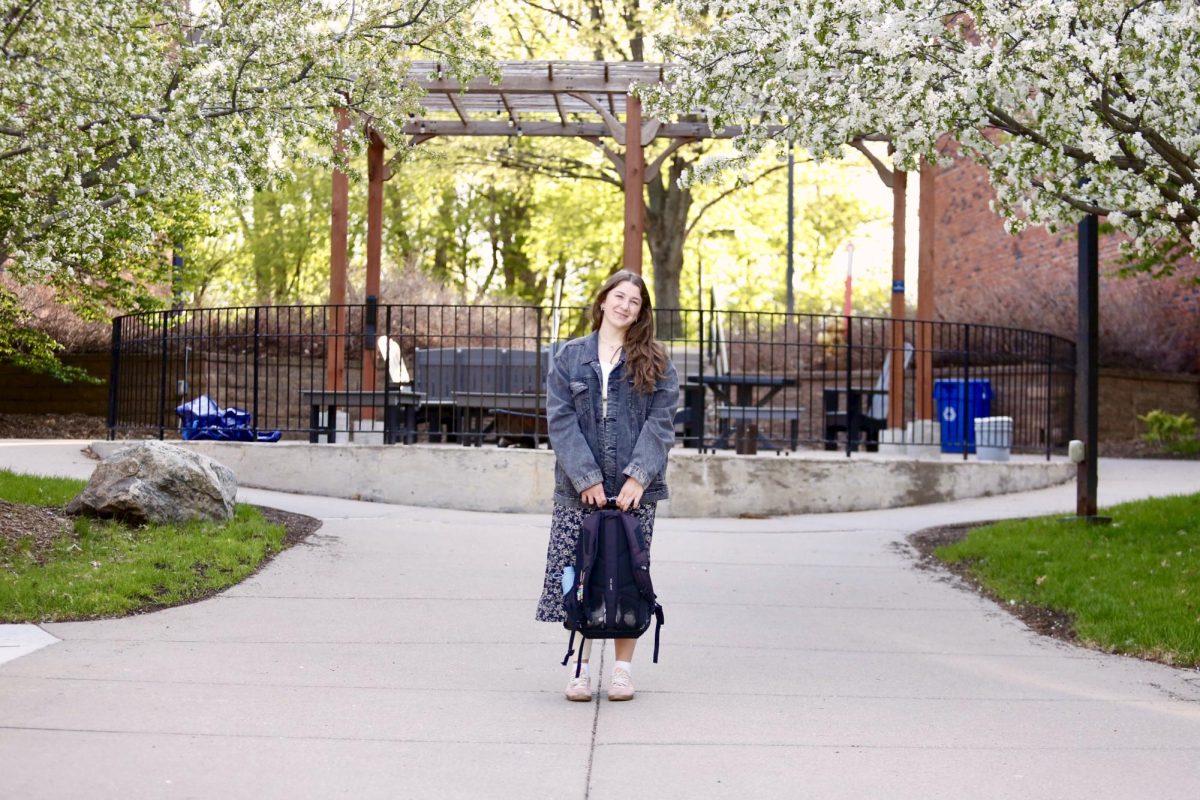
Sporting my orange floral shirt, navy skirt and black sandals that were starting to wear away at the edges, I passionately declared that the Athenian invasion of the island of Melos was entirely uncalled for and unethical (if you know, you know).
Professor Molstad did his best to quell the chaos that ensued, and if you asked him, he would likely say that no one won the debate; we all made excellent arguments. I like to think otherwise.
I finally took a seat, confident in my group’s research and execution in articulating our points. As I walked out the door, I knew that I was walking into the start of a memorable semester and an impactful year.
You might be wondering if the Humanities program is truly that different from the Modular track (known as CWILT back in my day). At first glance, the only major difference is that the Humanities program covers art, literary studies, history and theology chronologically. Each course explores themes within a set time period—Greco-Roman times to Post-Modernity. CWILT, on the other hand, groups those pillars into three separate subject-based courses: Christianity and Western Culture, Intro to the Creative Arts and Inquiry Writing Seminar.
And yet, both programs cover the curriculum required to fulfill the first series of General Education credits at Bethel. Both focus on the same subjects: art, literature, writing, history and theology. Both have pretty cool professors. So what’s the big deal about Humanities?
My heart for Humanities goes beyond the surface. I first heard about the program outside of CC313 during a tour in my senior year of high school. And even though I was dedicated to the track the minute my tour guide said “more writing,” “less tests” and “theater,” I learned with each class period that there was so much more to the Humanities program than fewer exams.
It turned out “more writing” meant a few small writing assignments throughout the semester and one major paper at the end of each term. “Less tests” meant two exams per course, and “theater” meant half of January was dedicated to putting on a Shakespearean play. And after two semesters and a J-term full of stresses, joys and ever-changing schedules, I realized what made the Humanities program so special.
As a little freshman living away from home, scared out of her skin and faced with the dramatic changes of post-secondary education, I found solace in my Humanities cohort. Coming from a medium-sized high school where I shared classes with the same people all year, college was a shock.
I quickly realized I could share a major-specific course with someone one semester, become friends, and then only see them in passing for the next five months. With everything else going on during the first year of college, that’s a lot for any freshman to swallow.
But then there was Humanities.
I made friends who had my back and turned every class into something fulfilling and worth attending. After being with the same cohort for an entire academic year, those bonds didn’t just fade overnight. I’m incredibly grateful they haven’t. I still meet with my closest Humanities friends every now and then; one of our sushi dates was even dubbed a “Humanities get-together” by a former classmate who found out about our excursion.
I also had a Humanities professor who deeply cared about his students and our education. He made sure I was okay after I failed a quiz and visibly held back stressed tears the entire class period. He acknowledged my anxieties and helped me work through daunting assignments. Now, whenever I have a life update or something to share, I pop over to Professor Molstad’s office to chat. Despite my graduation from the Humanities program, he has remained a point of constant encouragement and even acted as a reference for recommendation letters.
Most importantly, though, the Humanities program gave me a curriculum that challenged me to grow in my beliefs about faith, politics, human behavior and life.
I think a question we’re often faced with in post-secondary education is, am I actually going to use what I’ve learned? With Humanities, it’s an automatic yes.
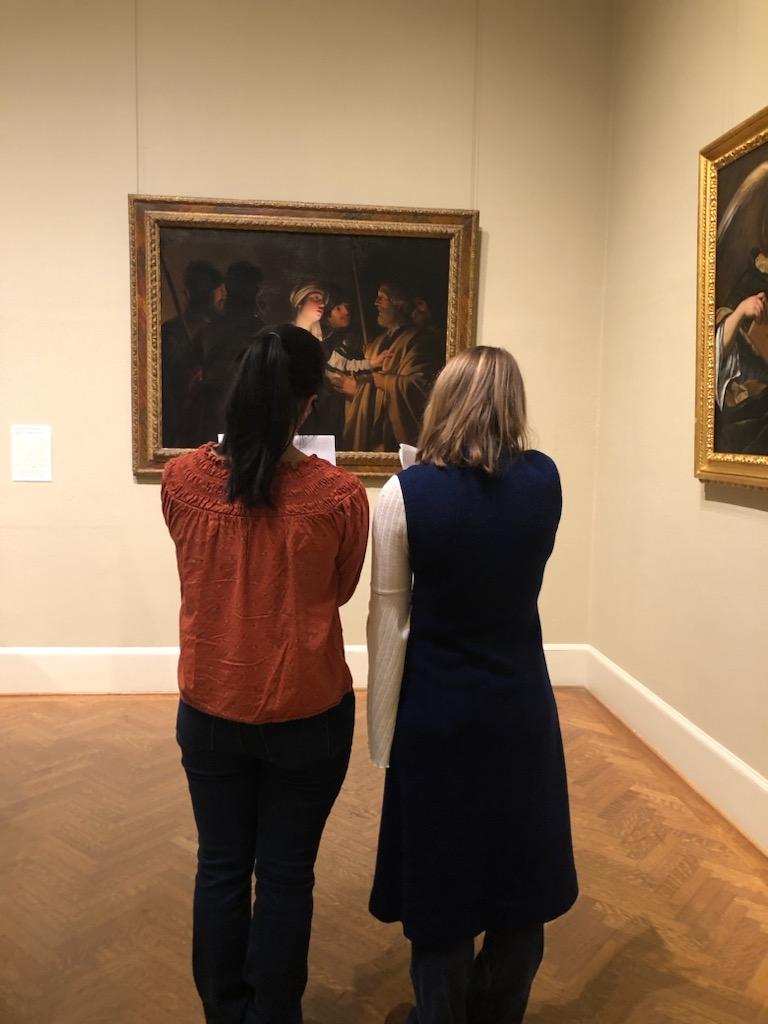
I still remember sunlight shining through the BC windows as my roommate taught me how to swing dance. Having conversations on morality in a classroom that is now the Lake Valentine Room. Studying artistic renderings of Jane Austen’s Persuasion characters on the chalkboard. Doing my best to copy Gerrit van Honthorst’s The Denial of St. Peter at the Minneapolis Institute of Art, and better connecting with the Renaissance era as I embodied a witty Shakespearean character.
Our seminar discussions showed me how to better understand people’s interactions, appreciate forms of artistic expression and see God’s hand in it all. Humanities truly taught me how to be a human being. I didn’t just get a glimpse of the world outside; I came to know it like a friend.
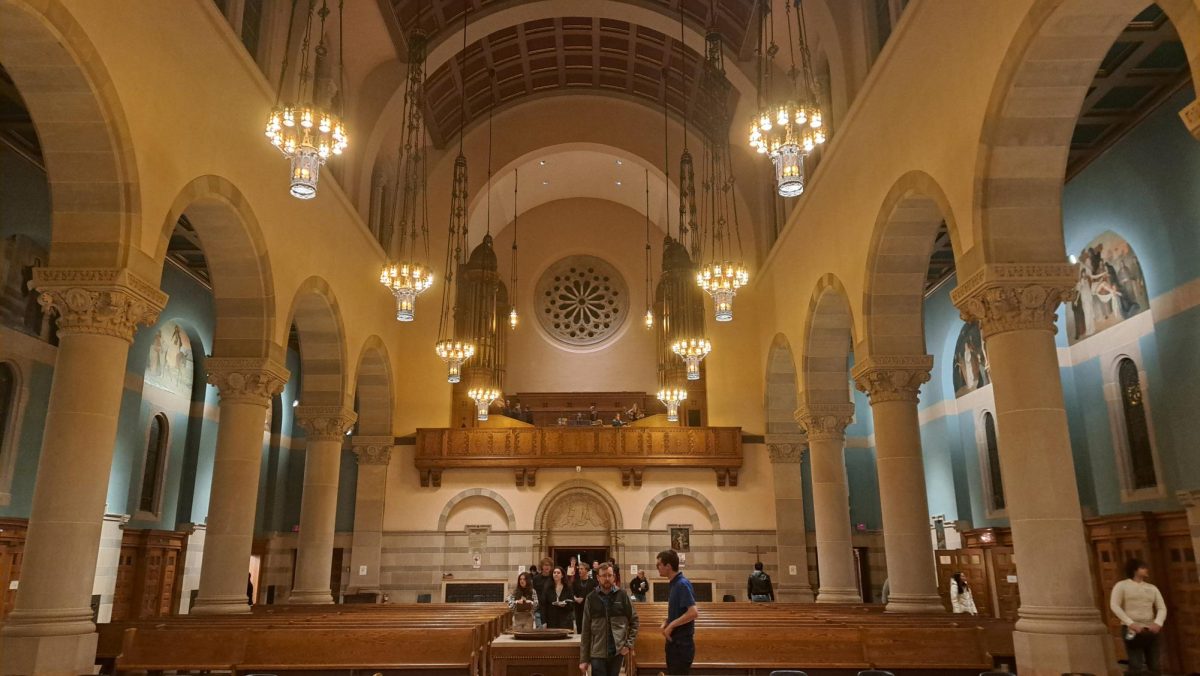
Our trip to St. Thomas More’s Catholic Community opened my eyes to a different perspective (Catholics were kind of like an endangered species in my hometown). Our division over the botched creation and monster dynamic in Frankenstein, examined through a Christian lens, clarified my understanding of morality in the world today.
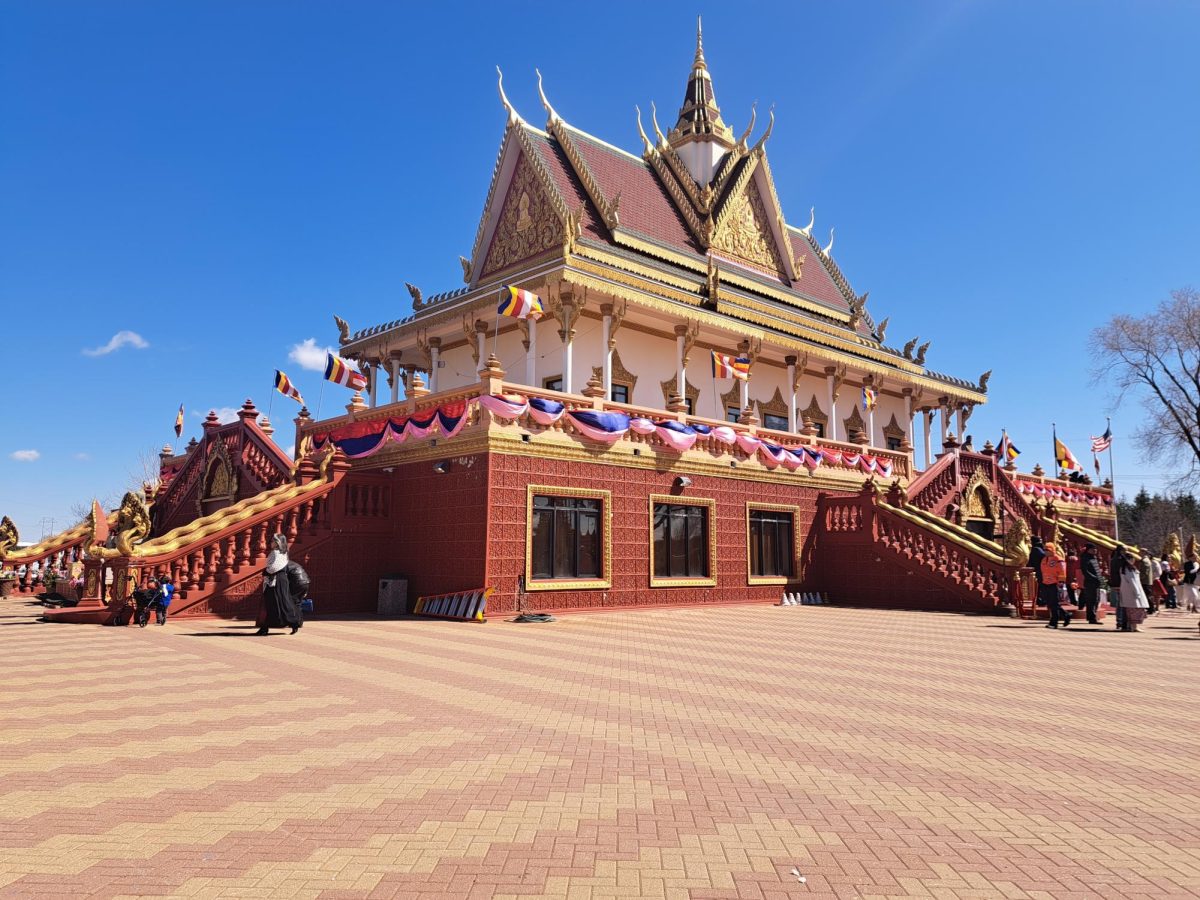
And our final research paper, on a topic of choice, allowed me to explore my heritage by analyzing the mind of a Cambodian dictator from the ‘70s. The things I got to do and learn have left me forever changed.
Through the Humanities program, I’ve grown into someone who not only learns, but listens. Who doesn’t just speak, but sees the thoughts and opinions of others with respect and genuine intrigue. The experiences I had are the reason I wear my heart on my sleeve and walk with openness towards every person I meet. Now, I don’t just see myself differently through the knowledge of God’s ever-present work in the world, I see everything around me with a new perspective, too.
No matter your thoughts on Bethel University’s GenEd tracks, the Humanities program is more than meets the eye. It’s not just a course series meant to fulfill a graduation requirement. It’s a vital integration of the foundations of our identity: art, literature, history and theology. Without these, we don’t just lose a critical part of our education, we also lose part of who we are.
Just say the word. I’d gladly stand up on a chair to prove it to you.