
Choreographer Sandy Agustin studied the dancers like a hawk. As they twirled across the stage, she watched for missed steps.
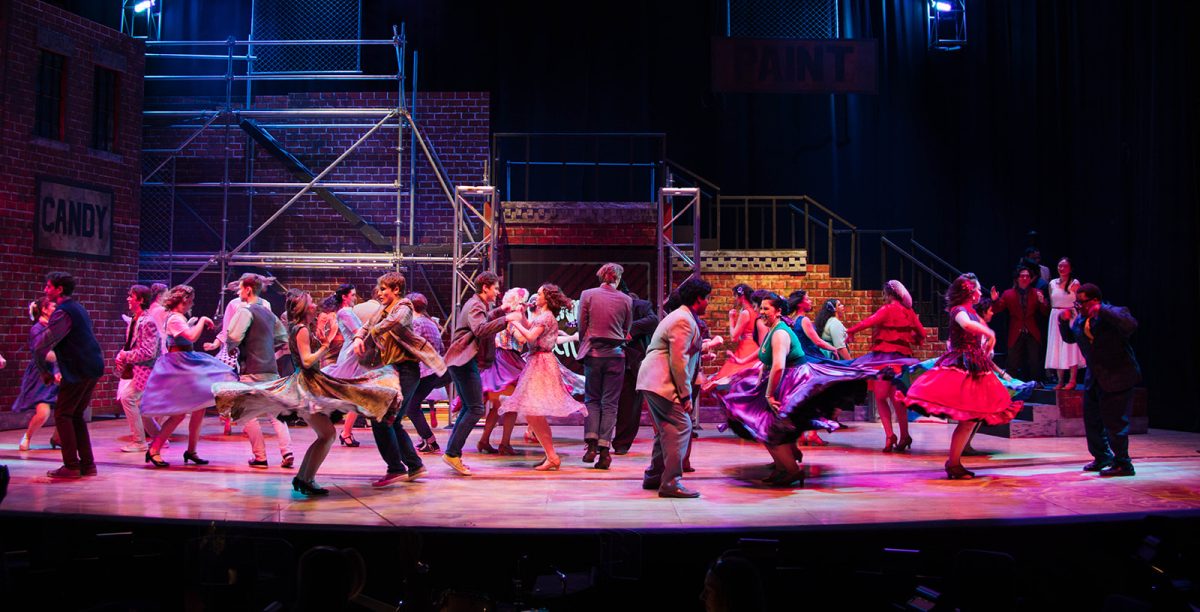
In the most intricate dance routine of Bethel University’s “West Side Story,” the dance at the high school gym, the stage is split into two halves: the “Sharks” on one side of the gym, and the “Jets” on the other.
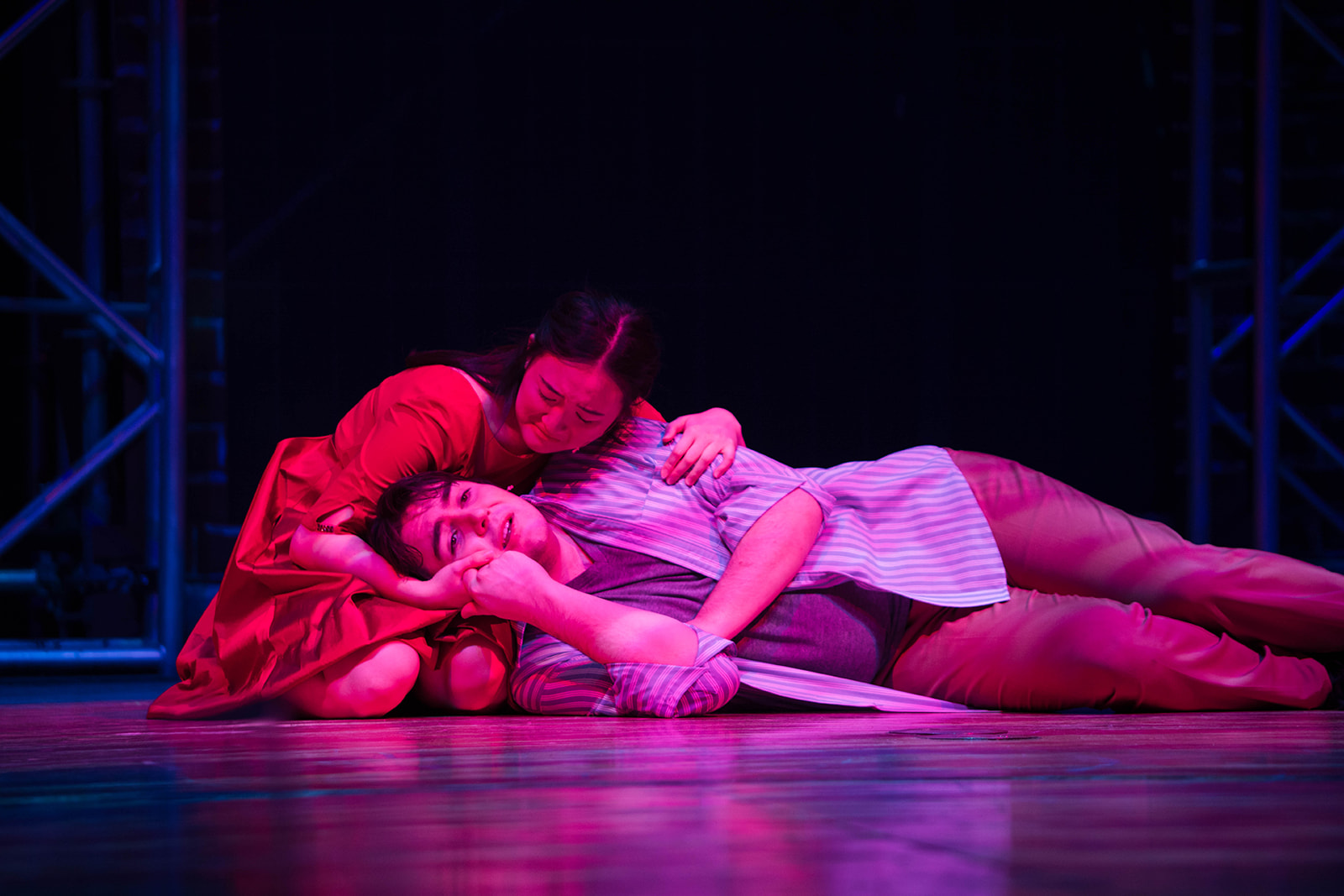
The musical tells the story of two rival gangs, the white “Jets” and the Puerto Rican “Sharks.” When Maria and Tony, members of opposing groups, fall in love, the tensions between the two groups clash in a violent ending where Tony is killed.
When the two groups enter the gymnasium, they are encouraged by their adult chaperones to dance together. Instead, the gangs split apart and compete in a high-tension dance sequence.
The scene was a collage of long, flowy skirts and colorful suits. The two groups cheered for their peers as they spun and leaped across the stage, clapping and whistling for one another.
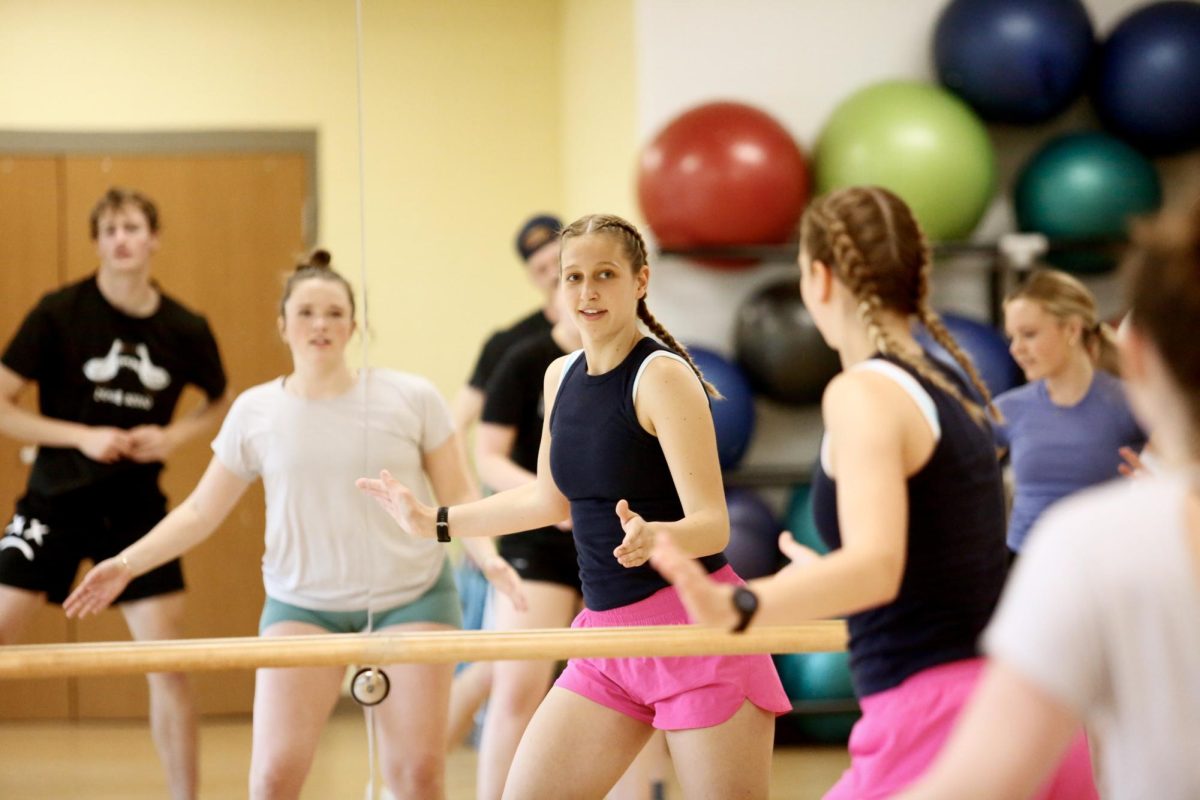
Agustin smiled. After just a month of rehearsals, her students, many of whom had little dance experience, had learned intense choreography for a dance-heavy musical. And the best part? They were having fun while doing it.
“Sometimes, the safest place to be in is that kind of community, sharing space and time and music,” Agustin said.
When rehearsal ended, students walked offstage, out of breath and reaching for their water bottles. They chatted, high-fived each other and packed up their belongings to leave.
Agustin stayed back, peering out the doors of Benson Great Hall. Her eyes locked on her car in the West Lot. She watched the street, looking for any unmarked vans that might be blocking her path.
She reached into her purse, past her passport, and grabbed her phone to call someone she trusted. Agustin stayed on the phone during her walk to her car and the entire ride home for fear of being stopped by Immigration and Customs Enforcement agents. This was her routine to and from every rehearsal.
One evening, she’d forgotten to pack her dinner for a six-hour rehearsal, and debated what the safest option was to get food.
“I thought, wow, should I risk going out to a fast food place and maybe getting stopped?” Agustin said. “Should I risk calling DoorDash and having somebody else’s life be at risk because I’m hungry?”
Eventually, she remembered the Bethel dining hall, a safer alternative to leaving campus.
“Isn’t that pathetic? That those thoughts would go through my head?” Agustin said. “If you don’t have to think in those terms, it doesn’t cross your mind.”
Before the Trump Administration deployed 3,000 federal agents to the Twin Cities metro area during “Operation Metro Surge” in January, Director of Choral Activities Dr. Merrin Guice Gill and director Glenn Morehouse Olson chose the January musical “West Side Story” to address a different issue affecting the community at the time.
In January 2025, two months after the 2024 election, Gill said she felt compelled to make a statement about the worsening tribalism and factionalism she observed in the United States and in the church.
“We wanted to send the message that having an issue, or hating people or not seeing your fellow man as someone who bore the image of God was problematic,” Gill said. “So we picked ‘West Side Story,’ because the main message of ‘West Side Story’ is groups […] hating each other based on preconceived notions, on fear.”
During the casting process, Gill and Olson spoke with the leadership team of Voz Latinx, a student-led organization that focuses on sharing Latinx culture at Bethel, and encouraged Hispanic students to audition.
“We wanted to make sure that they knew that we were doing something that was designed to make them visible and make this culture more visible,” Gill said.
Neither Gill nor Agustin had prepared for how the state of the Twin Cities community would reflect the show’s themes as rehearsals began the next January.
“Cast members definitely were feeling the threat of this insurgence [of ICE activity] while the rehearsal process was happening,” Agustin said. “It did interrupt, at times, people’s participation.”
During rehearsals, the cast and leadership team took time to discuss the importance of showing kindness and compassion to cast members who were directly affected. Senior Malachi Henderson, who played Chino, felt emotional from seeing how current events impacted other cast members.
“Sometimes I would be in tears. Sometimes I would cry, because I have people that I know being directly affected by this,” Henderson said. “No matter what side you see it as […] we’re human at the end of the day.”
While processing these events together, Gill offered advice to combat the hopelessness the cast was feeling.
“We are not politicians. We cannot heal the world. What we can do is look at our fellow man in front of us and treat them as a fellow image bearer of God,” Gill said. “Every day we talked about that. We made sure that they knew we cared about them and what their families were going through.”
Students enrolled in the musical theater J-term course spent nine hours rehearsing each day, five days a week. The set and the costumes were also all made by students. From 9 a.m. to noon, students stitched costumes backstage, hammered stakes into the stage and painted cardboard to create store signs and replicate a fictional street corner on the Upper West Side of Manhattan. From 12-9 p.m, student actors sashayed from dance class to music rehearsal to blocking and fight choreography.
“[I’m] watching students not only perform brilliantly on the stage and showing their talent, but also understanding fully that we are basically doing ministry as we’re doing this art,” Gill said. “Yes, I want the notes to be right, I want the moves to be correct, but it’s also about delivering a message that builds the kingdom.”
On opening night, as the curtains rose and the spotlight illuminated the actors on stage, Gill sat in the audience and watched the viewers’ reactions. She saw people crying, and others who looked shocked by the violence onstage.
“I wanted people to really feel that the tragedy is not okay, the collateral damage of hatred is not okay,” Gill said.
Overwhelmed with uncertainty, sadness and hopelessness about the state of the world, Agustin questioned if putting on a musical was a helpful response. But through the production process, she found that it created a space for students to better understand one another and show up alongside each other.
“Making art and being creative keeps you moving forward. You cannot stay stagnant,” Agustin said. “We build community in theater. You’re unified in the theme, and you’re unified in the music. You’re raising your voices together, and you’re actually activating community.”