2026 has been christened the year of “going analog” across various news outlets and, ironically, social media platforms.
This trend can include pivoting away from smartphones, as reported by the New York Times Magazine. “Going analog” can also mean using physical media and doing activities like crosswords, knitting and crafting, as seen in The Guardian.
Bethel University students have tried using older technology to save money, get off their iPhones and break away from subscription-based media platforms.
‘The freedom of not doomscrolling’
Sophomore Diego Soderholm began using an iPod touch (6th generation) for his personal communication almost two years ago.
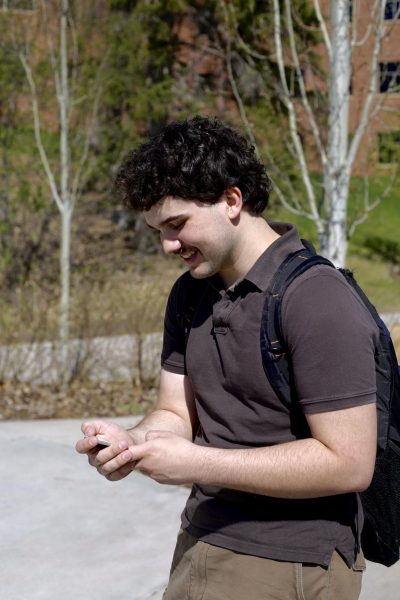
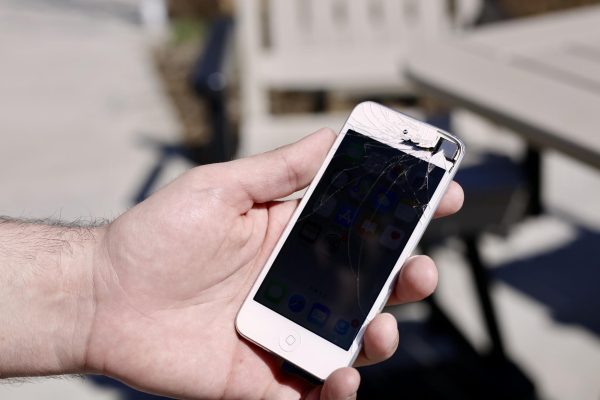
Soderholm’s iPhone 12 broke the summer before his freshman year, and he decided to go back to his iPod to save money.
He doesn’t have a phone number and instead uses Snapchat for texts and calls. Short-form video content platforms such as Instagram and TikTok don’t work on his iPod. Soderholm says he averages about one hour of screen time a day now, while his iPhone 12 screen time was often four hours.
“I’ve enjoyed the freedom of not being doomscrolling,” Soderholm said.
However, the iPod comes with inconveniences. Soderholm can’t use Google or Apple Maps, so he tries to carpool with friends whenever he visits a new location. His iPod battery runs out quickly.
Bethel’s new Microsoft authentication system doesn’t work on his iPod, so Soderholm has to call his brother on Snapchat every day and ask him to approve his sign-in attempt. And when people ask for his number, he has to either give them his brother’s number or offer his Snapchat username.
“The biggest struggle is not really being to able to connect to peers, because my technology is pretty outdated,” Soderholm said. “Not having a number is also a big struggle, but I make it work.”
However, in other aspects, he said he’s better able to connect with friends. Without many apps to scroll on or notifications to check, he stays off his iPod while hanging out with friends and suitemates.
Soderholm mostly uses YouTube to listen to music, along with a few CDs from artists such as Gorillaz and the Beatles. He said he’s not sure if he wants to download Spotify in the future.
“I’ve almost liked being forced to be really thoughtful with my music choices,” Soderholm said. “I feel like it’s made my connection with music a little deeper.”
However, he plans on buying an iPhone soon due to the iPod’s inconvenience.
“Hopefully, I get a new phone, but it’s going to be weird switching to modern technology,” Soderholm said. “It will be nice, though. I’m ready to be done.”
‘You have nothing to show’
The phrase stuck with senior Nicholas Jarman after he had a conversation with a stranger at church. They were discussing society’s transition from physical media to subscription-based models for services such as music streaming.
With these models, if users stop paying for their subscriptions, they lose access to their music or media libraries.
“It’s kind of scary, because it’s not your own in any way,” Jarman said. “You listen to all this music on Spotify, but you have nothing to show for it.”
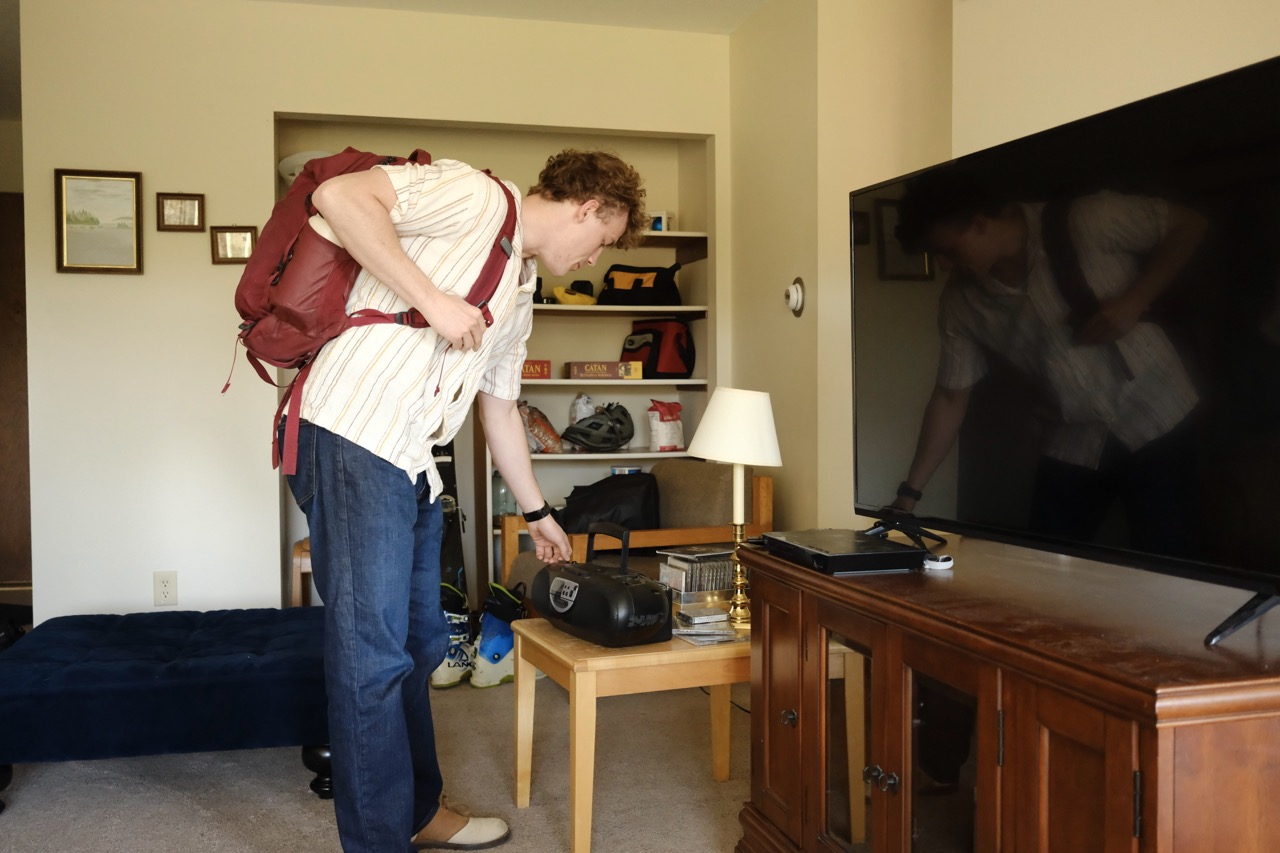
A few weeks later, he visited his grandma’s house in Indiana and found an old stereo that could play CDs and cassette tapes. His grandma offered him the stereo and some CDs she didn’t listen to often.
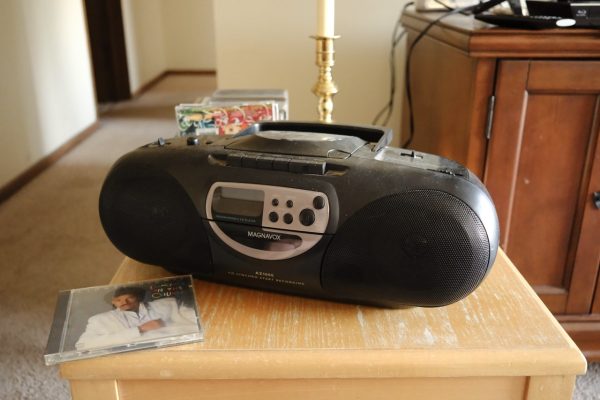
Jarman brought home Lionel Richie and Grateful Dead CDs, along with a Bruce Hornsby tape his dad made as a teenager. His parents also gave him a Peter Gabriel CD.
Now, he has set up the stereo in his North Village apartment and is trying to listen to songs and albums all the way through.
“I have a chronic problem where I listen to a song, and I’m like, ‘All right, I’m a minute and 30 seconds in, I’m gonna play a different song,’” he said. “I would like to try to listen to albums. I think that would be cool.”
Going through CDs and listening to music with his dad has also been a bonding experience. Jarman discovered his dad loves Jimi Hendrix and owns a rare Bob Dylan record.
“Now I go home, and he’s like, ‘Oh, let’s just sit and talk and listen to a record,’” Jarman said. “I would have never thought that would be fun, but it is.”
‘It forces you to be present’
Junior Ian Ottaviani used a flip phone for the first few weeks of his freshman year.
“I just hated the time wasting that I did on my normal phone,” Ottaviani said. “[The flip phone] definitely forces you to be present.”
Ottaviani said lowering his screen time with the flip phone worked because he couldn’t download any “time-wasting” apps such as Instagram or Snapchat. The phone’s capabilities were limited to calling, texting and navigation.
However, after a few weeks, Ottaviani stopped using the flip phone.
“It was just kind of impractical,” he said. “It took like 15 minutes to draft a text message.”
Ottaviani had set his flip phone ringtone to the Old Spice whistle jingle, and his phone was too old to turn off the ringer. His friends would text him at all hours of the day just to hear the whistle ring out.
He also received a wide variety of reactions to the phone from classmates and friends. Some were curious, and many said they admired his commitment.
“I didn’t realize how out of place it seems. If you’re in the Grill and you pull out a flip phone, it’s just different,” Ottaviani said. “I feel like there’s a kind of social stigma around it.”
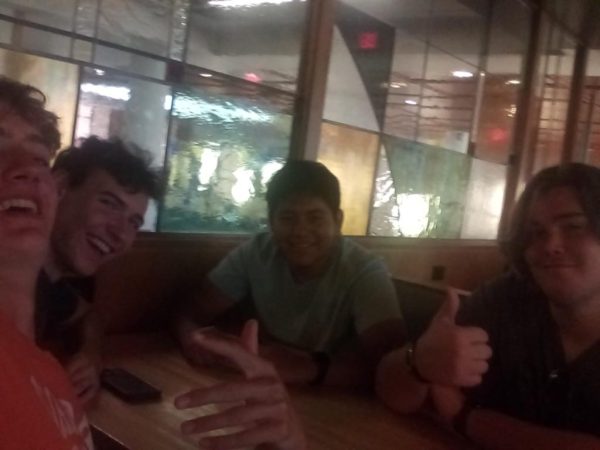
For Ottaviani, the flip phone was part of his process of figuring out how to minimize screen time.
“Ever since I first got social media apps, I’ve always been wanting to limit them,” Ottaviani said. “It’s really hard to have a healthy relationship with them.”
Now, he uses a Brick, a physical app-blocking device that has gained popularity since it was invented in 2023. The Brick works with a corresponding Brick app to lock designated apps on a phone. The only way to regain access to these apps is by physically tapping the phone against the Brick.
Ottaviani has a daily schedule set with the Brick, so he can’t access addictive apps, such as Instagram and Snapchat, from 9 a.m. to 5 p.m. For example, if Ottaviani is in Bethel’s academic buildings and wants to go on Instagram, he has to walk back to his dorm and “un-Brick” his iPhone.
If other students are interested in trying out a flip phone, Ottaviani recommends it. He said it was eye-opening to reach for his flip phone at random times, and then remember that he “couldn’t do anything on it.”
“I am kind of proud of my flip phone days. Part of me wants to go back to that,” Ottaviani said. “If it was more practical, I think I would have been able to stick with it.”