It was dark the evening of March 20 in Szczecin, Poland. A high school student named Igor drove Bethel University’s mission trip leader, Jack Hanson, around the city in his convertible.
Igor had convinced Hanson to leave shortly after the Friday night youth group event Bethel students hosted at Kościół Chrześcijan Baptystów w Szczecinie (Szczecin Baptist Church).
As the pair drove around, Hanson began asking questions about God, church and the youth group. Igor told Hanson that he had never heard people pray out loud like the Bethel students had.
Hanson asked how that made him feel.
“Connected,” Igor said.
A short but profound response, Hanson thought.
For the second year in a row, Bethel campus ministries brought a group of students on an 18-hour journey by plane and bus to Szczecin Baptist Church for a spring break mission trip. The goal of the trip was to build lasting relationships with high school students in Szczecin.
Bethel graduate Katie Smith started the trip with the first team in 2025. She wanted to bring a group of Bethel students to Szczecin to teach English at high schools and work with the Baptist church. Smith set up a meeting with Matt Runion, Campus Pastor for Partnerships, during the fall 2024 semester.
“[Runion] kind of went into the meeting…like: ‘So we are going to do this trip. What do you need from us?’” Smith said. “[I] was very surprised by how willing they were to do it.”
Jack Hanson and Dan Herzog, Bethel graduates who went on the trip as students in 2025, led the team of 18 students this year.
“I had an amazing time on the trip last year,” Herzog said. “It was a cool experience cross-culturally to see how people live their life in Poland and to step into what God is doing halfway across the world.”
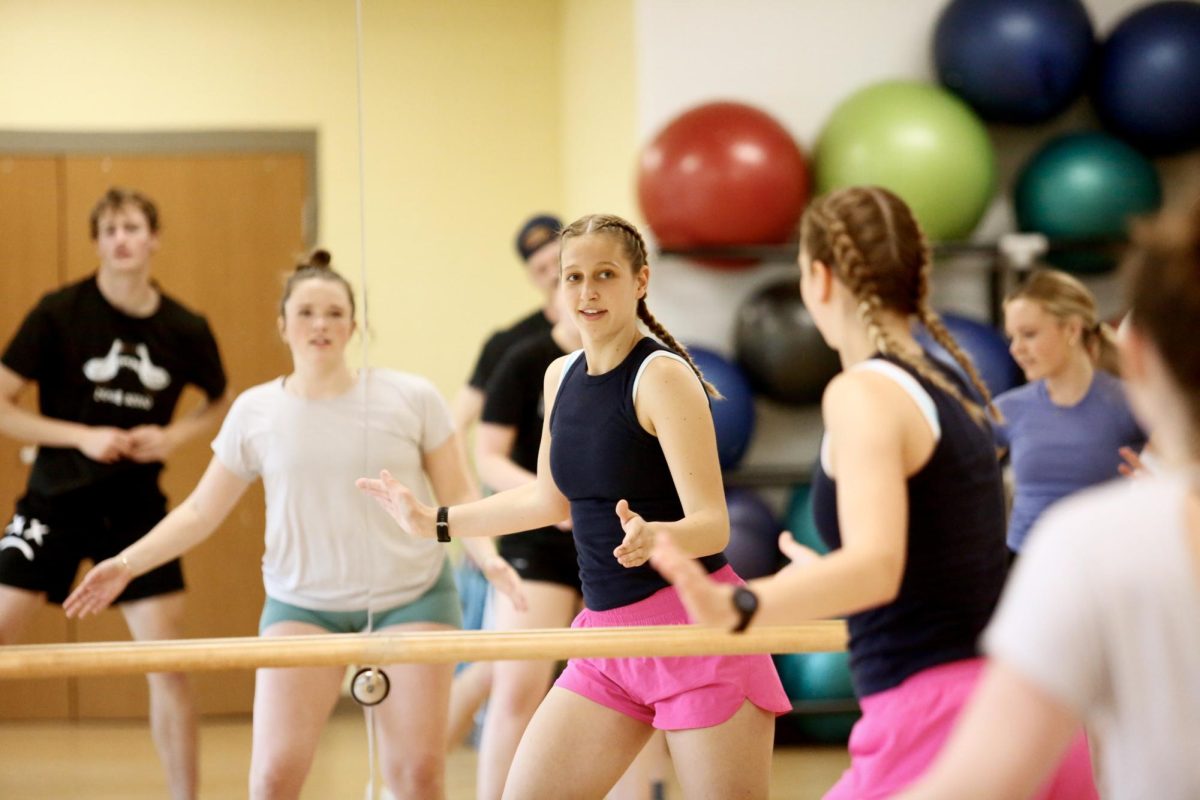
During the trip, the team attended a Szczecin soccer game, visited church members’ homes for dinner and toured the city. Their main mission, however, was to visit high schools, talk with students and build relationships with them.
At two different Polish high schools, Bethel students presented to classes on topics such as Minnesota, U.S. sports and pop culture. At the third high school, Polish students gave the Bethel team a presentation on Szczecin, including a walking tour of the city.
Throughout the week, the Bethel team invited Polish students to a youth group event they were going to host Friday night at the church.
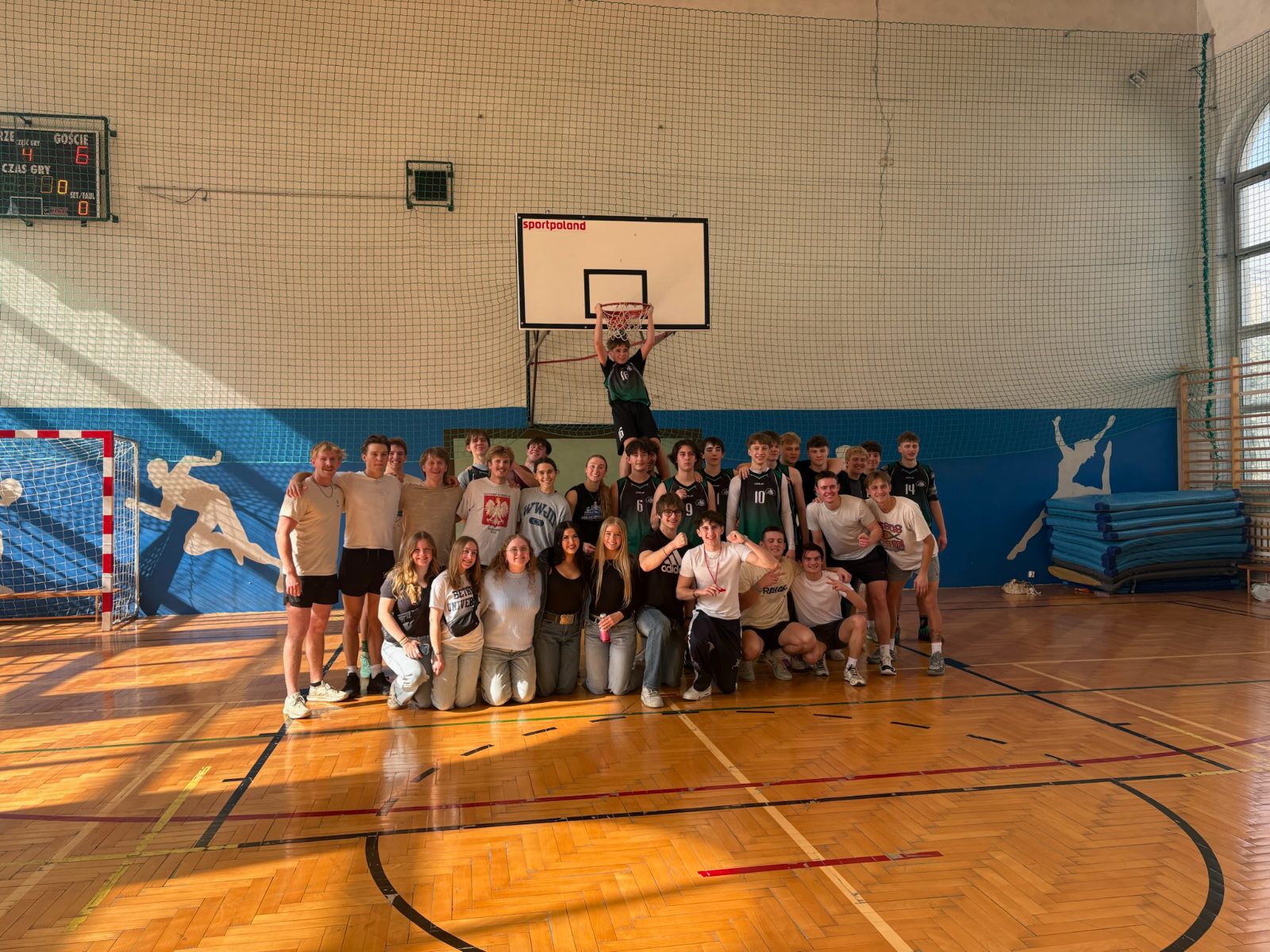
March 17 was the busiest day for the Bethel team, featuring multiple basketball games at two different high schools. During the games, the Bethel and Polish students who weren’t on the court chatted with one another.
“Do you guys know the Macarena?” one Polish student asked.
When the Bethel students said yes, a crowd of thirty people began to form at one end of the basketball court. Everyone started dancing the Macarena together.
After the dance was done, the group walked for an hour to the mall in downtown Szczecin. Friendships formed with every laugh and thoughtful question.
This is what it is all about, the Bethel team discussed with each other afterwards. This is why we are here.
History of Szczecin Baptist Church
Szczecin Baptist Church was established around 180 years ago, but experienced major hardships during World War II when it was seized by the German government and turned into apartments. Despite still owning the building, the church had to pay to use its own space.
All of the surrounding buildings in Szczecin were bombed by the United States during the war. But the church stayed standing.
After the war, Szczecin was given back to Poland after being a German-owned city for many years.
“God had a plan for this church,” Lemuel Martinez, leader of International Ministries, said.
In 2018, the church underwent much-needed renovations, as many of the rooms were in the same condition as they had been during WWII. The pastors wanted to have a welcoming environment to host people at the church.
“God took a church that was falling apart, that was dying, and decided to make it a light,” Robert Merecz, pastor of Szczecin Baptist Church, said. “This building is becoming a center for evangelical Christianity here in Szczecin.”
Why bring Bethel students?
Ever since John Paul II, a Pole, became Pope in 1978, Poland has been known as a Catholic country. The saying “To be Polish is to be Catholic” is used across Europe.
Merecz said that around 86% of the Polish population identifies as Catholic, but very few of these Poles actively practice Christianity, such as regularly attending church. Since the majority of Poles identify as Christian, evangelism can be difficult, especially among the youth. However, Bethel students provide the church with a unique opportunity to reach students.
Szczecin isn’t very popular for tourists, so when college-aged Americans come to town, word spreads around the high schools about the foreign visitors.
Polish students are interested in hearing about what life is like in the United States, so they came prepared to ask lots of questions, making it easy for the Bethel team to give presentations and talk with the students.
When the Bethel team invited the Polish students to the Friday church event, most of the students said they wanted to come so that they could continue spending time with the American team.
“They are more open to [the Bethel students] than to us locally,” Merecz said. “[The Polish students] know that they can share their problems…with [the team because] they will be gone.”
This allowed the team to open doors and share the gospel with the high school students who came to the Friday night youth group. Over 75 students attended the event.
Also, by hosting this event, the Bethel team was able to make students aware of the church’s presence in the community. The team could build friendships with the students and locals to help draw in more people to Szczecin Baptist Church.
“I hope to continue [hosting] these trips annually,” Merecz said. “Maybe some [more] Bethel students will see that God is calling them for missions, for ministry overseas.”
When leaving Szczecin, the Bethel team was reminded that the mission isn’t over yet. With new friendships beginning to bloom, Merecz encouraged the team to keep in contact with the Polish students so that they could continue sharing their faith.