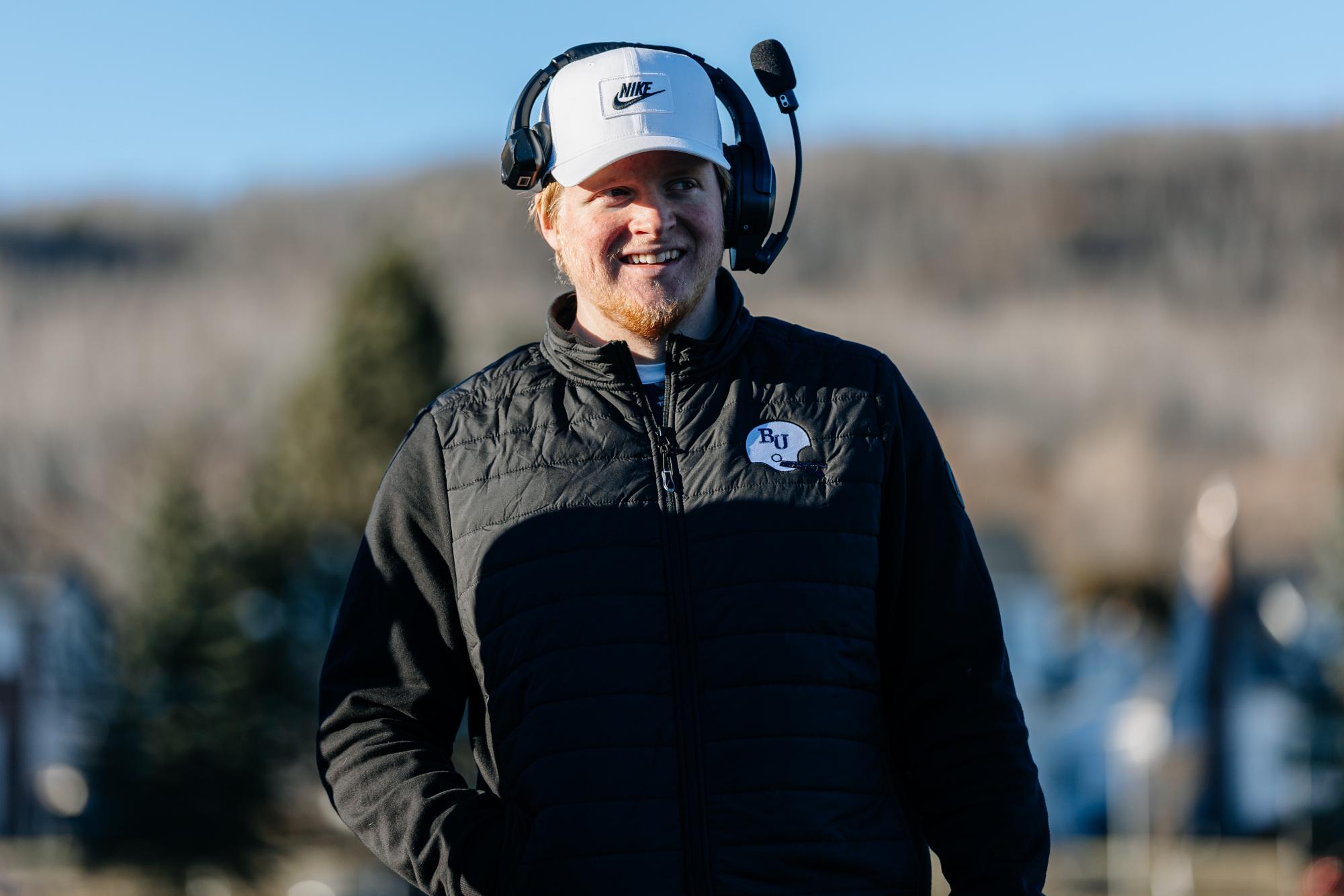

Ben Frey first noticed the numbness in his right leg as he carried groceries into his house in March of 2025. He let it go for a bit, thinking it was just asleep. The “TV static” feeling came, but Frey never regained feeling throughout the leg.
He visited the E.R. in Vadnais Heights, where no one could detect a pulse in his foot. From there, he was taken by ambulance to Regions Hospital. Doctors put him on blood thinners to bring color and warmth and a pulse back to his cold, white foot and let him go after overnight monitoring.
Two weeks later, Frey woke up with extreme pain on his left side. He couldn’t keep anything down, including water. So he went to the emergency room for the second time in as many weeks and found out his kidney artery was blocked by a blood clot.
Because an E.R. visit happened a second time, doctors knew it was even more serious. They transferred him via ambulance again to Regions Hospital, where his case confounded cardiologists. A CT scan showed partial damage to his kidney from the blood clot. But none of the specialists could determine a cause.
His treatment continues to this day. Just a few weeks ago, tests showed the clot didn’t come from his heart – good news, but still indeterminate. Soon, his cardiologist will bring his case to a panel at the American Congenital Heart Association, where a team of experts will attempt to solve whatever issue exists.
“It’s a weird question mark to live with,” Frey said. “Because there wasn’t a cause.”
But amidst the tests and procedures, one thing was clear to his doctors. As Frey lay in his hospital bed March 28, 2025, doctors informed him he was done playing football indefinitely.
“You’re still in a state of helplessness,” Frey said. “I’m in a gown, I’m hooked up to all this stuff. I got three IVs. And they’re telling me the sport you’ve poured into for six years is done now.”
–
It wasn’t the first time Frey was medically barred from playing football. Born with a heart murmur, Frey underwent open heart surgery in seventh grade to replace a valve. Complications from that surgery forced him to be placed on an external pacemaker in the ICU, before another surgery implanted an internal pacemaker. While he’d never played contact sports before the surgery, the pacemaker officially kept Frey out of football. Doctors told him he would work a desk job his whole life.
Still, Frey began playing soccer to stay active in a non-contact sport. Then he started weightlifting his freshman year of high school at Eau Claire Memorial High School in Wisconsin, where his coach, Kyle Rothbauer, poured into him.
“He was a very encouraging man of faith in a public school,” Frey said. “So [he] motivated me even more and made it a place I wanted to be.”
As Frey became more in tune with his body through lifting, and considered his soccer experience, he decided to try kicking footballs during his sophomore year. Using a holder made with PVC pipes, he practiced, even taking videos of himself to study later.
Frey pitched the position as non-contact to his cardiologist, even citing that it would benefit the team if he got hit; roughing the kicker penalties result in a free 15 yards for a football team, so opponents often avoid kickers at all costs. His cardiologist approved.
He kicked well in high school. As he looked into playing Division III football, Frey found several Wisconsin schools – one of them being the University of Wisconsin-Platteville, which he visited on a game day. The Pioneers played – and lost to – the Bethel University Royals, which intrigued Frey.
Bethel had exactly what Frey needed in a university.
“I wanted to go somewhere where I know I could actually make an impact,” Frey said. “But, you know, it was good football too.”
When Frey came into Bethel as a freshman, the Royals already had a reliable kicker in Hugo Cifuentes, who was a junior at the time. Frey had no issue waiting his turn for two years, but Cifuentes took his extra year of COVID-19 eligibility last season. Frey had to wait until this season, his senior year, to get a shot.
And he was prepared. Frey never missed a 6 a.m. team lift in the spring, ready for his chance at the primary kicker position.
Then the blood clots struck in March 2025. Football was no longer possible as long as Frey was still on blood thinners. He’s taken Eloquis – a prescribed blood thinner – since the Regions Hospital trips. Now, the wrong hit would still result in 15 free yards, but it could also cost Frey his life.
“I have the cardiovascular system of an 80-year-old man,” Frey said. “I’m in a 21-year-old body.”
Frey met with Tavian Swanson – the Royals’ defensive backs coach and special teams coordinator – right away to tell him what happened.
“It was heartbreaking just to see the pain in his eyes and the work he put in to get to where he is,” Swanson said. “But there was also […] comfort in his eyes.”
Part of the conversations Frey had with Swanson, and later head coach Mike McElroy, revolved around how to keep Frey involved with the team.
“When he tells us he can’t play,” Swanson said. “He’s trying to already figure out, ‘How can I still provide for this program, even though I’ll never be able to step on the field again?’”
Swanson functions as the coordinator for special teams, meaning he analyzes the schematic side of kickoffs, punts and field goals. But the Royals lacked an expert on the function and technique that goes into kicking.
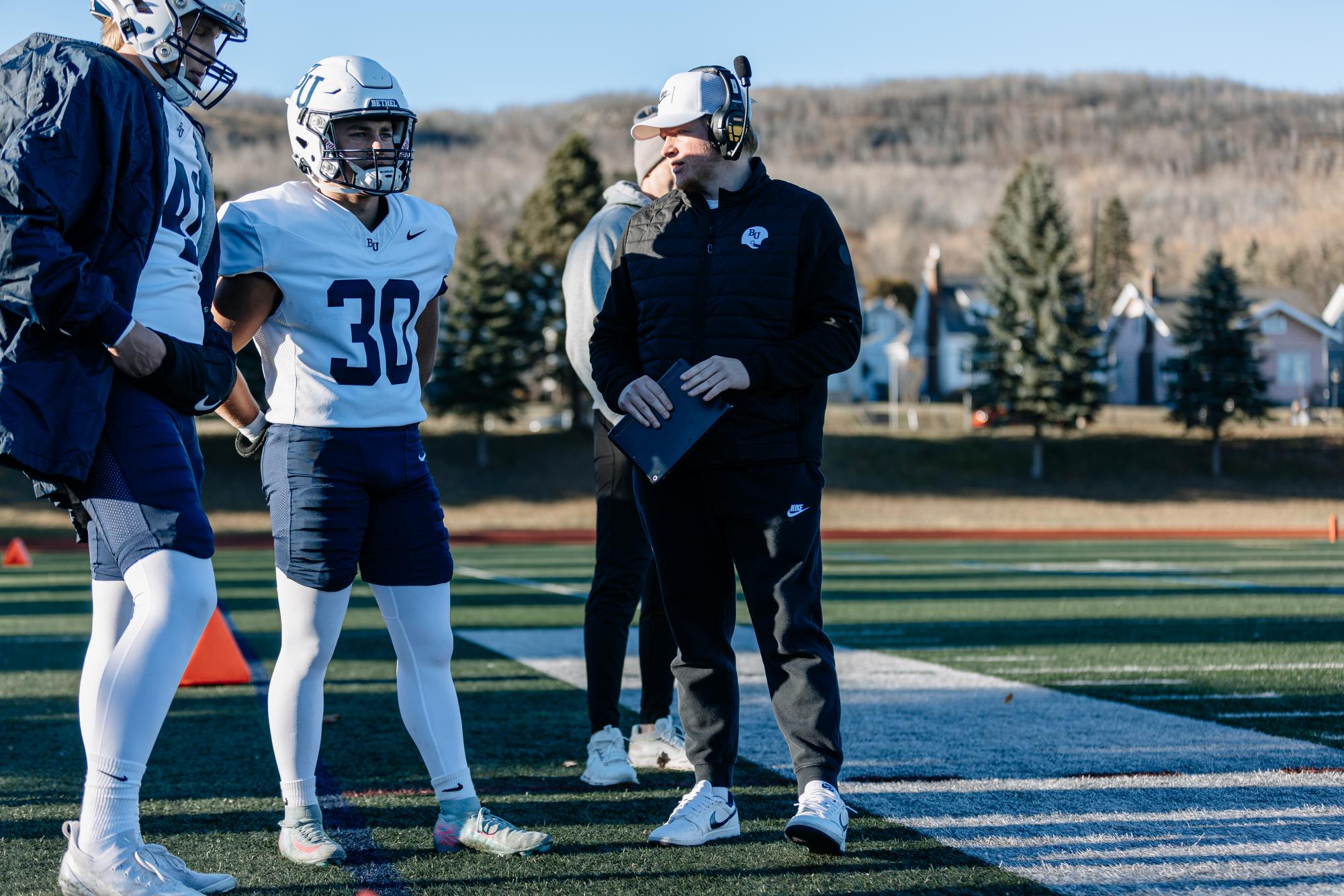
After a “trial run” during spring practices in April, it was evident he knew how to coach kickers as well as punters and even long snappers. The Royals kept Frey on staff as a student coach during the fall season.
“I can guarantee you, if I ask any other one of the coaches [about kicking], they have no clue,” current Royals kickoff specialist Eli Nowacki said. “It really takes a kicker to know how to coach a kicker.”
Swanson agreed that none of the other coaches fully understand the mechanics of kicking the same way as Frey.
Frey often compares kicking technique to a golf swing, with countless moving parts that have to line up perfectly. He emphasized the mental side of it, saying 70% of success comes from the mind, while the other 30% is physical.
“I could sit on a couch the entire day and visualize kicks,” Frey said. “And I could maybe end up better than the guy who just sat in the gym all day and lifted.”
To demonstrate his experience to coaches, Frey was instructed to create a weekly practice plan for specialists. Part of the plan included creating individualized drills catered towards Nowacki and placekicker Zach Bengston.
For example, Nowacki hunches over more than Bengston when he kicks, so Frey developed a drill to keep Nowacki’s shoulders upright during kickoffs.
“I really do trust his decisions,” Nowacki said. “What he decides, I know he took time to think about it.”
That trust from both players and fellow coaches has led to Frey making significant game-day decisions. Frey wears a headset on the sidelines as he’s in consistent communication with the other coaches, who ask for his opinions on when kicking a field goal is an option.
Ultimately, the decision between a field goal attempt and going for a fourth-down conversion comes down to McElroy. But McElroy often asks for Frey’s advice before making the decision.
During Bethel’s game at Concordia College (Moorhead) Nov. 1, the Royals had the ball at Concordia’s 31-yard line with seconds remaining – enough time for one play – before halftime.
Frey wanted Nowacki, who has a stronger leg than Bengston, to attempt a 48-yard field goal, and McElroy agreed. Nowacki nailed it for the longest made field goal in the Minnesota Intercollegiate Athletic Conference (MIAC) since 2019.
Frey recognizes the pressure that comes with such weighty decisions. He identifies himself as a future-minded person, so Frey knows each of his actions have consequences.
A week later, during Bethel’s home game against Carleton College, the Royals faced a similar situation just before halftime. Frey sent out Bengston to attempt his own 48-yard field goal. This time, Bengston missed.
“I’m coaching kickers that are determining some guys’ jobs,” Frey said.
He recognized that Bengston’s missed kick will now be on McElroy’s resumé, as well as every other coach who had a say in the decision. But he’s not shy about owning his decisions.
“I’ve learned it’s just such an opportunity to be put in this position,” Frey said. “I get to still be a part of this team that I love and that I’ve poured into, and now it’s just from a different perspective. And if God has me here for this reason to be a coach, to be a teacher, which I think he does, I think this came naturally for me.”
Frey’s experience as a player also gives him an advantage as a coach in relating with his players. Just a year ago, Nowacki and Frey were teammates, even competitors at times, for this season’s kicking job.
Now Frey balances relating with Nowacki, Bengston and long snapper Eli Scheideman as peers while maintaining authority as a coach. But Nowacki says it hasn’t been a challenge.
“The best thing that he does is just caring,” Nowacki said. “He’s super intentional in the way that he interacts with us.”
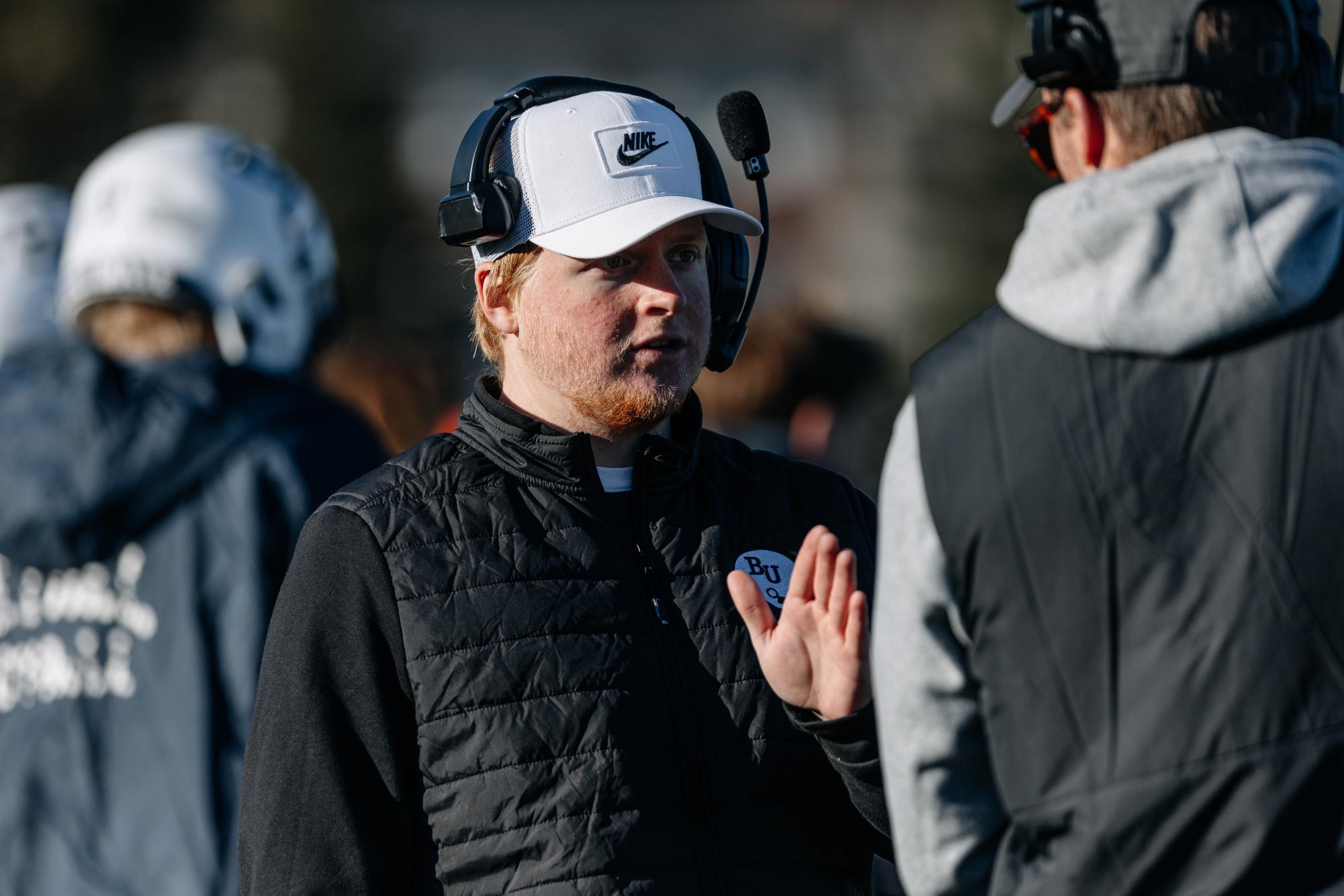
A significant piece of Frey’s role as a student coach is mediating between players and coaches. He seeks to be an advocate for his specialists, who, at times, exist within their own group apart from the offense and defense.
So it’s moments like Nowacki’s long field goal at Concordia, and even Frey’s ownership of the missed field goal a week later, that build trust between him and his players.
“My whole goal is petitioning for them to get them the most opportunities,” Frey said. “I want them to score points. I want them to succeed.”
Now, Frey is looking to the future. As a senior social studies education major, Frey sees countless ways to incorporate this experience into his career. A season of coaching kickers succeeding on extra points and field goals at a combined rate of 91% in the regular season certainly qualifies Frey for a high school coaching position if he doesn’t remain on staff at Bethel.
What could have ended Frey’s life now gives him new possibilities.
“God has really given me this chance to excel […] the biggest thing I’ve learned is just taking anything I can get as an opportunity,” Frey said. “This could have been a curveball that I could have just stepped away from.”
If it wasn’t for that curveball – a complicated cardiovascular system – Frey may never have found his heart for coaching.



Brian Amundson • Dec 11, 2025 at 8:21 pm
Ben Frey is a great young man. Ben will succeed wherever he goes.
Aiden Penner wrote an excellent article about Ben.