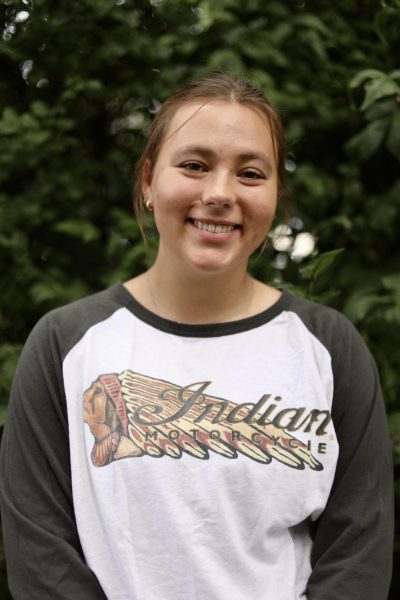
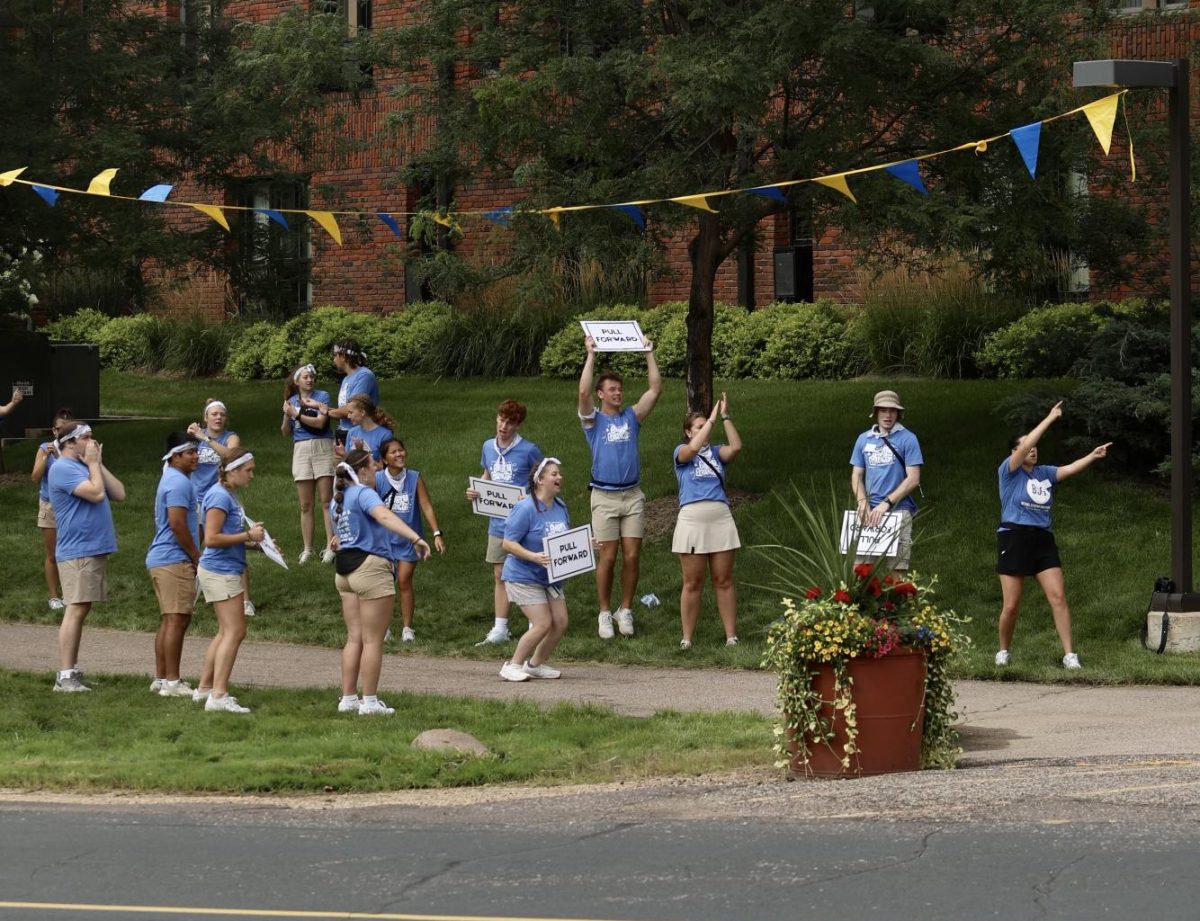

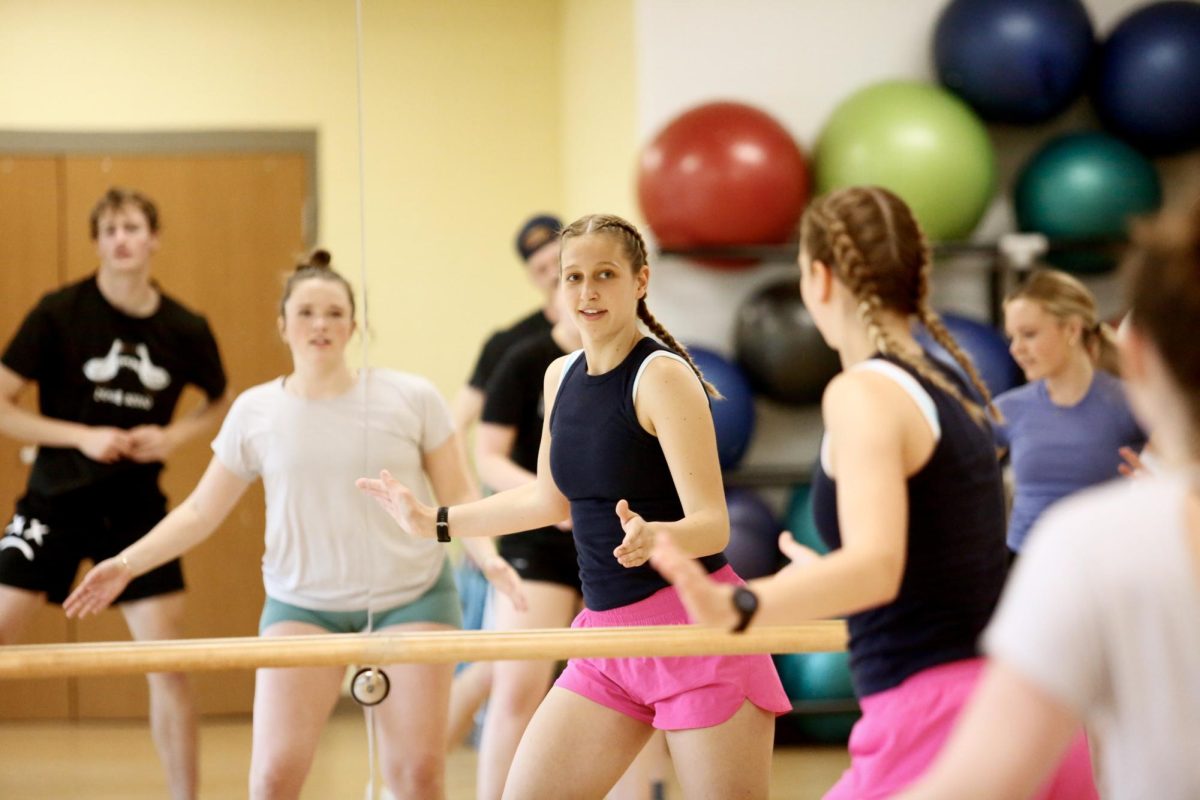




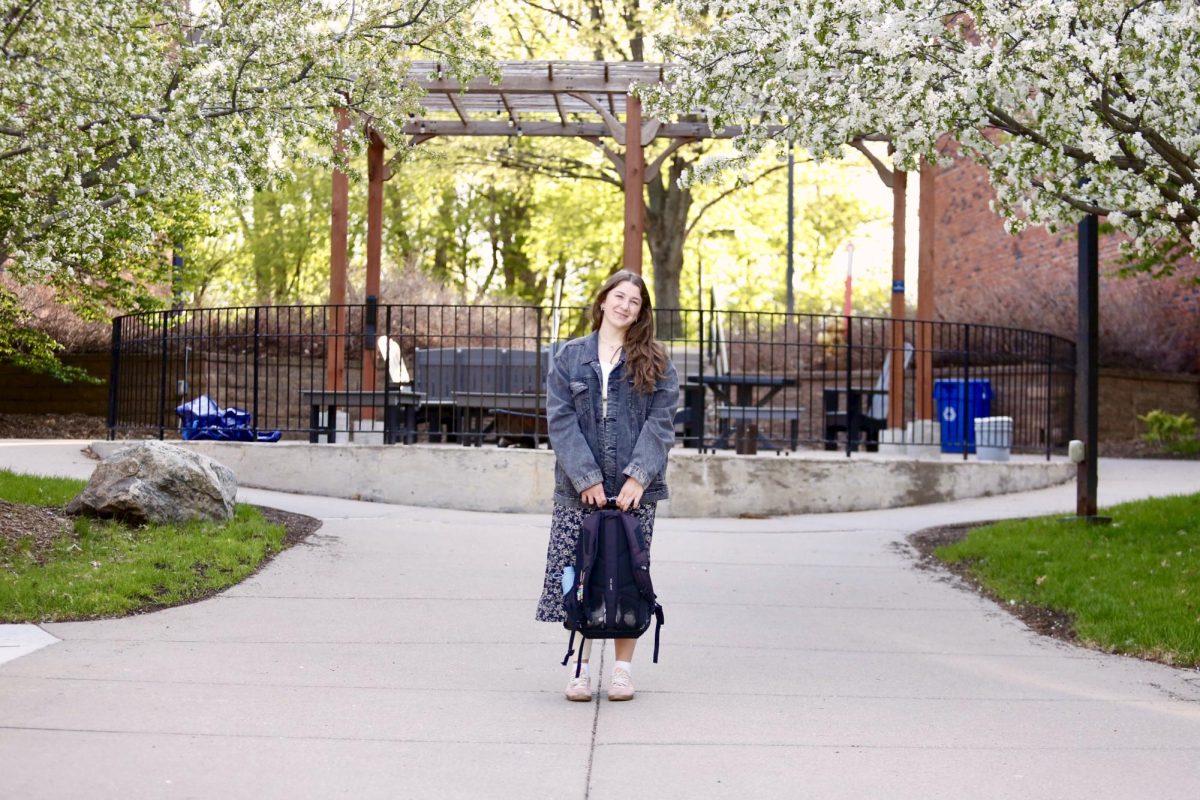




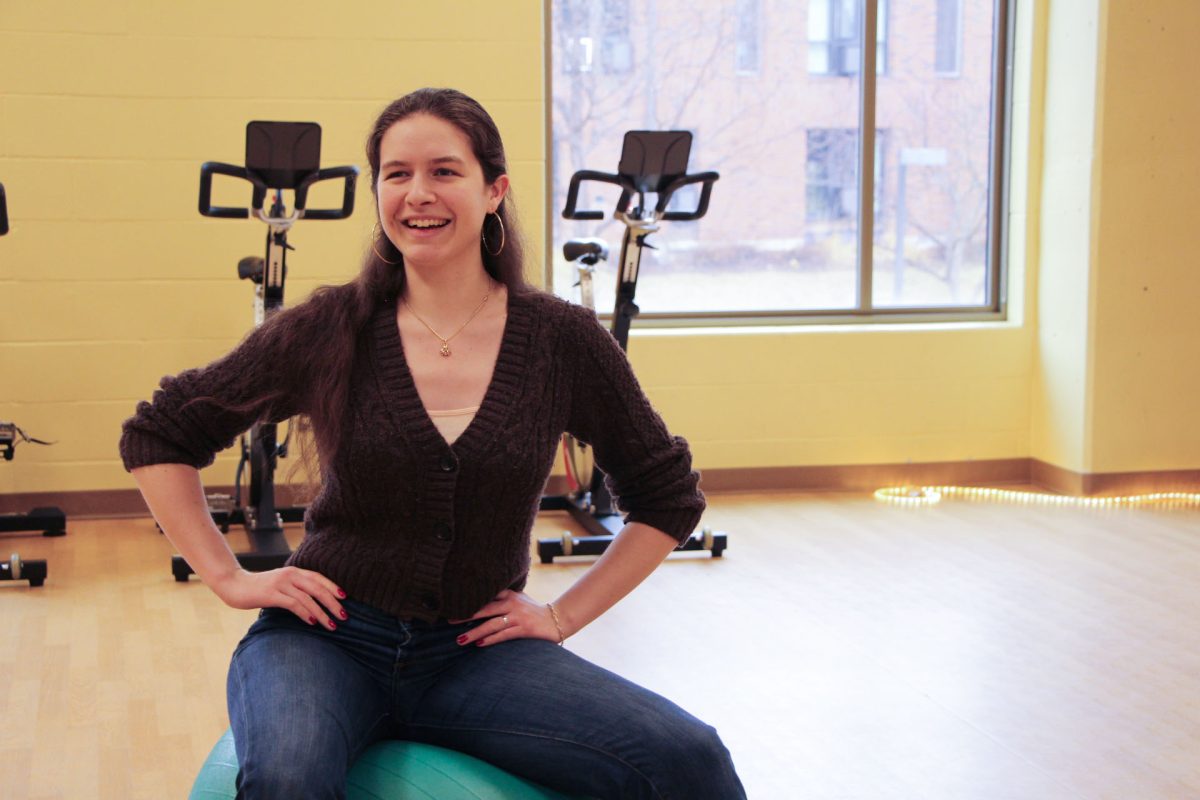
Esperanza Ortega raced down the hallway, long brown hair flying behind her as her fellow students cheered her on. As she rushed to dance rehearsal for Bethel University’s Welcome Week show, she felt the elation and relief of knowing that a miracle had happened.
Less than an hour before, she had helped a woman give birth as a birth doula.
“I find birth to be the most peaceful thing I’ve ever been in,” Ortega said. “The moment I enter a room where a woman is giving birth, I’m so calm, and I feel so amazing.”
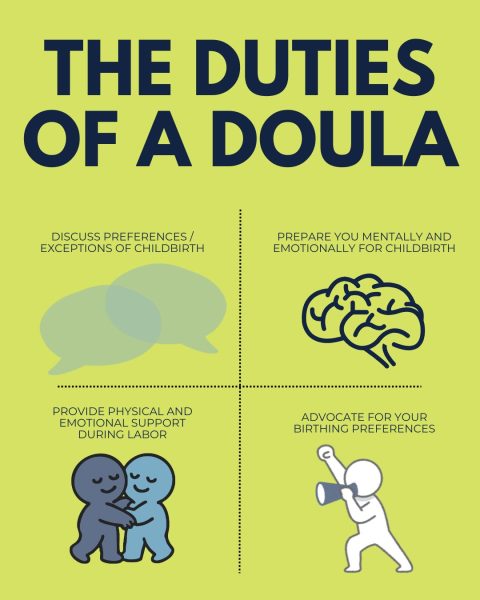
A birth doula works as the support system for a woman in labor, whether that be emotionally, physically or informationally. Ortega’s job starts with an interview with the mother-to-be, where the two decide if they will work well together. If she gets hired, Ortega works with the client to make a birth plan.
“She takes it very calmly, but she also is very direct,” Zoe Whitney, a friend and fellow Bethel student, said.
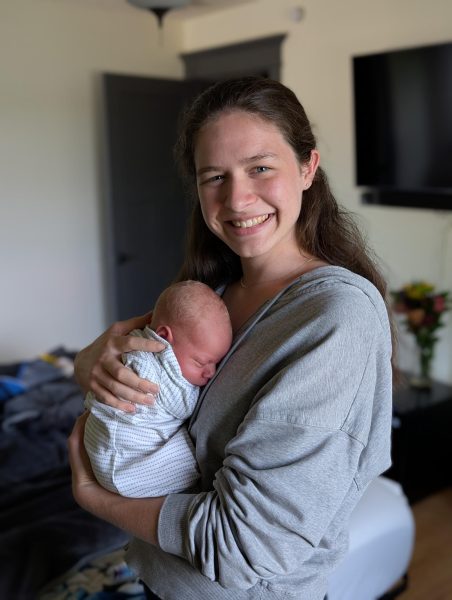
During the birth, Ortega offers support and advocates for the mother with the birth team. She helps with postpartum care and takes photographs for the family, often focusing on pictures with the newborn. A couple of weeks later, it’s just a postpartum visit to check in with the mother and offer any other assistance, then onto the next potential client.
When on call, Ortega needs to be ready to go to the client’s side at any second. She could end up staying with the mother for several hours on end through a long labor. It’s an impressive amount of work, and a lot of unpredictable moments, but Ortega doesn’t feel stressed out during delivery.
“Sometimes crazy things will happen during birth, but it rarely ever crosses my mind that I should be worried about it until hours or days after birth,” she said.
Ortega can trace her love for birth back to Bethel.
When she was 12, she went to visit her great uncle, Daniel Taylor, who taught English at Bethel. While he was working, she wound up in the nursing department, where she saw the birthing dummies they kept there.
“[I] thought it was the coolest thing in the world,” Ortega said.
Fortunately, her mother had a large amount of books on the subject because she had done all of her births unmedicated, including an unplanned home birth.
From there, Ortega found herself on the path to becoming a midwife. When she was 16, she took an internship with some home birth midwives in Waconia, Minn.
When senior year of high school rolled around, however, she experienced a setback to her future plans. At an interview at Christian Heritage Academy of Midwifery in Colorado Springs, where she intended to go for college, Ortega felt like it wasn’t the right place for her. She felt like her dreams of becoming a midwife had been shattered. It took her until April of that year to decide to give Bethel a shot.
Over spring break during Ortega’s freshman year at Bethel, a friend recommended a Doulas of North America International (DONA) birth doula course. Knowing that her other plans had been put on hold, Ortega took the class and spent her spring break poring over course materials. One three-day training intensive later, Ortega could start working as a doula.
“When you start taking on clients, you just jump in,” she said. “It was literally just me figuring it out on the fly.”
Her favorite birth was the one that happened during Welcome Week in August. Her client was a family friend. It was Ortega’s first home birth. In the past she’d done them at birth centers.
“Being in her own space, it was so peaceful,” she said.
The circumstances surrounding the birth were not nearly as calm. Ortega had let her fellow Welcome Week staffers know that she was on call, expecting her client to go into labor soon.
“They all knew I could disappear at any minute,” she said.
By the time Sunday rolled around, Ortega had only a two-hour window in which she could leave without missing the rest of the Welcome Week activities.
Only a few minutes into her time frame, Ortega’s phone rang. It was time. She raced to her client’s house. Luckily, it wasn’t far away and the birth itself took less than an hour. The mother had already had two other children and didn’t require much postpartum care, so Ortega was able to race back to Bethel halfway through dance rehearsal.
To Ortega, the best part of being a doula is forming strong connections with the families she is working with. She loves getting to advocate for them and see the love and joy surrounding the birth of a child.
“She does a very good job of loving people around her,” Whitney said. Whitney’s aunt was Ortega’s client during Welcome Week. “My family just loves her.”
Ortega said the hardest part of being a doula is keeping her energy up.
When she is on call, Ortega follows a sleep schedule and takes naps when she can. She tries to make sure she is eating and drinking enough water. Doulas aren’t typically supposed to be with their clients for more than 20 hours during labor because of the strain it puts on their energy. Ortega will usually tag-team with another doula, giving each other time to rest between shifts. She can also trade off with the mother’s significant other.
Another difficult aspect of Ortega’s job is balancing it with everything else in her life. She acts as the Commuter Life director for Bethel and a production manager for the athletic department. These roles, along with her work as a doula, have given Ortega an aptitude for communication. She stays in close contact with her professors and peers to balance schooling with her job.
“She plans ahead,” Communications professor Ripley Smith said. “She warned me two or three times during [one] semester about the possibility of being called away.”
She handles the educational side of the job on her own time, reading books on birth and staying informed on the newest regulations.
Now that she is on the doula track, Ortega doesn’t think that she will give it up.
“I might just stick with being a birth doula and never go into midwifery,” she said. “I love the connection piece that birth doulas have.”
She is currently building her application for certification, which requires a three-day training intensive and an additional class, and plans to continue her work as a doula after college. She would also like to use her media production major to do birth film and photography.
“Esperanza’s awesome,” Whitney said. “If you don’t know her already, you should definitely meet her.”
Whatever her future holds, Ortega will be ready to drop everything for a mother in need.